

Placing the shuttle exactly where you want it is a skill that applies to every stroke, from a full-court clear to a net shot played a few centimetres above the tape. Power wins the occasional point, but accurate placement wins rallies, because it moves your opponent, opens space and forces weak replies. This guide focuses on the mechanics that decide where the shuttle goes: racket-face angle, contact point, swing path and body alignment. The individual shots each have their own guide, so use this page as the foundation and follow the links for shot-specific detail.
The Four Factors That Decide Direction
- Racket-face angle at contact. The shuttle leaves roughly at right angles to the strings. A change of a few degrees moves the landing point by a metre or more over a full court length.
- Contact point relative to your body. Hitting further in front or further to the side changes the angle the racket face presents.
- Swing path. The direction the racket head is travelling through contact, straight through the shuttle or across it, adds direction and spin.
- Body and foot alignment. Being balanced and correctly turned makes the first three factors repeatable.
Accuracy problems almost always trace back to one of these four. When a shot misses, ask which one changed.
Racket-Face Angle: Up, Down, Left and Right
Vertical Angle (Height and Length)
- Open face (tilted back): sends the shuttle upward. Used for clears, lifts and high serves.
- Flat face (vertical): sends the shuttle level. Used for drives and pushes.
- Closed face (tilted forward): sends the shuttle downward. Used for smashes, drops and net kills.
Horizontal Angle (Straight or Cross-Court)
The horizontal angle decides whether the shuttle travels straight or cross-court. On a forehand overhead, the face pointing straight down the line sends a straight shot; turning it slightly inward sends it cross-court. On the backhand the same principle applies in reverse.
A simple test: place the racket on the shuttle at your contact point and hold it still. Wherever the strings are facing is roughly where the shuttle will go. Practise adjusting that facing without changing your preparation, so opponents cannot read the direction early.
Contact Point and Timing
For a right-hander’s forehand, where the shuttle is met along its path changes the natural direction of the shot:
- Contact well in front: the racket has already turned through, so the shuttle tends to go cross-court.
- Contact level with or slightly in front of the racket shoulder: the natural position for a straight shot.
- Contact late (beside or behind you): the face is still open to the side, so the shuttle tends to go straight or drift out, and usually with less control.
Skilled players can hit straight or cross from the same contact point by adjusting the wrist and forearm, which is the basis of deception. For learners, though, consistent contact in front of the body is the single biggest improvement in accuracy, because late contact limits your options and lets the opponent read the shot.
Swing Path, Forearm Rotation and Slicing
Direction is not only about the face. The path of the racket head matters too:
- Straight-through swing: the most reliable for length and direction on clears and drives.
- Across-the-shuttle swing (slicing): brushing across the base of the shuttle changes its angle, slows it and can make it fall more steeply. Used for slice drops, cut smashes and spinning net shots.
- Forearm rotation: pronation on forehands and supination on backhands give fast, compact control of the face late in the swing.
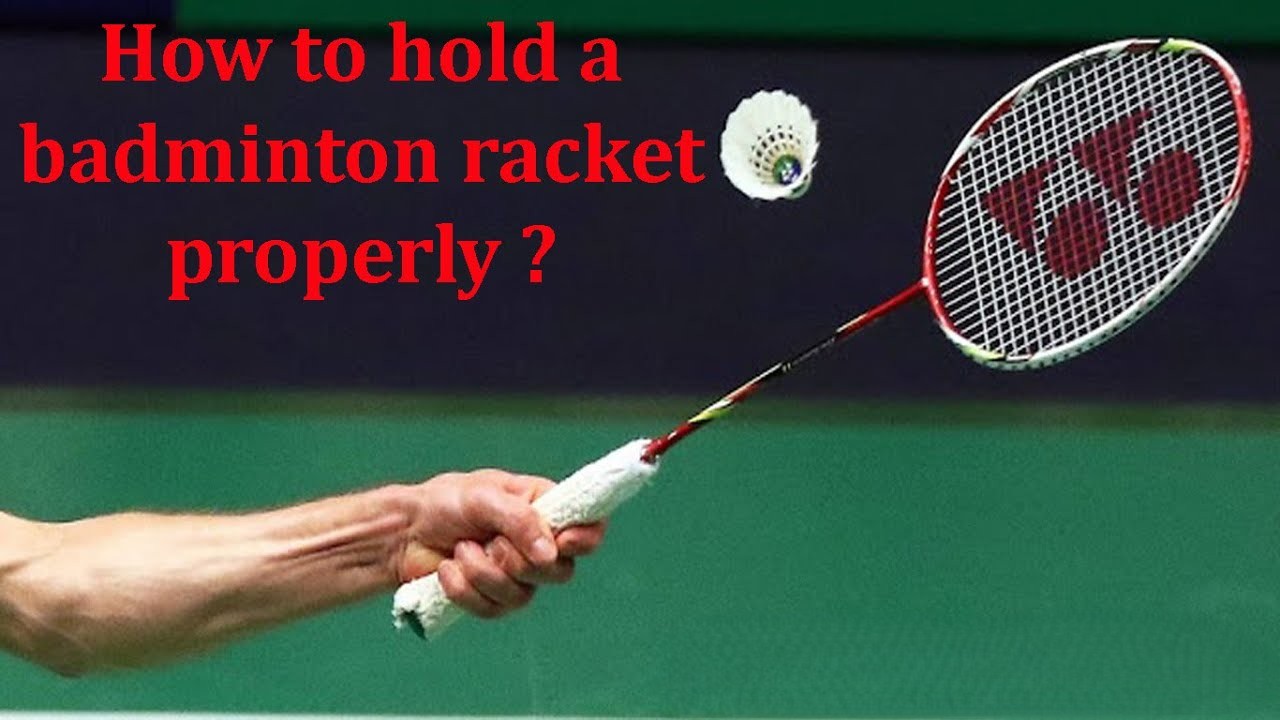
Keep the grip relaxed. A tight grip freezes the forearm and makes small face adjustments impossible. The grip types guide explains forehand, backhand and bevel grips if you need to check your hold.
Applying Direction Control to Each Shot
| Shot | Key direction factor | Typical target |
|---|---|---|
| Clear | Open face, contact high and in front | Within about a racket length of the back line |
| Drop shot | Slightly closed face, reduced swing speed | Just past the net, inside the short service line |
| Smash | Closed face, contact in front of the racket shoulder | Sidelines or the opponent’s body |
| Drive | Flat face, contact at about shoulder height | Past the front player, toward the mid-court |
| Net shot | Face angled up slightly, minimal swing | Close to the tape on the opponent’s side |
For the detail of each stroke, see the step-by-step guides to the drop shot, net play and the backhand clear, which is the shot where direction and length are hardest to control.
Footwork and Alignment
Even a perfect face angle fails if you arrive late or off balance. To make your direction repeatable:
- Arrive early so you can set your feet before the swing, not during it.
- Turn side-on for overheads so the shoulders can rotate through the shot.
- Keep your head still at contact. Looking up early to see where the shuttle goes often pulls the racket face off line.
- Recover after the shot so you are ready for the reply rather than watching your placement.
Drills for Direction Control
1. Target Zones
Mark four targets: two rear corners and two front corners. A partner feeds; you play clears to the rear targets and drops to the front, ten of each. Record your hits per target. Shrink the targets as you improve.
2. Straight-or-Cross Call
The feeder calls “straight” or “cross” as the shuttle leaves their racket. You must keep the same preparation and change only the face angle. This trains late decisions, which is the basis of disguise.
3. Drive Lanes
Two players drive flat across the net, keeping the shuttle within a lane marked by tape along one sideline, then switch to the other lane. This builds control of the horizontal face angle at speed.
4. Net Box
Rally using only net shots, aiming to land every shot inside a box between the net and the short service line. Small face changes and soft contact are the only tools allowed.
5. Video Check
Film a few minutes of practice from behind the court. Watch your contact point and racket face rather than the result. Simple phone recording is enough; the article on how technology is changing badminton training describes more advanced options.
Common Mistakes That Ruin Accuracy
- Gripping too tightly, which stops the face being adjusted late.
- Hitting late, beside or behind the body.
- Changing preparation for different directions, which tells the opponent where you are aiming.
- Swinging harder to fix a short shot instead of fixing the contact point.
- Looking at the target instead of the shuttle at contact.
- Stopping the swing abruptly instead of following through toward the target.
Frequently Asked Questions
Is accuracy or power more important for club players?
Accuracy. A placed shot to the corner usually causes more problems than a powerful shot straight at an opponent, and it is easier to repeat under pressure.
How do I hit cross-court without giving it away?
Keep the same preparation as your straight shot and change the face angle late with the forearm and fingers. The straight-or-cross call drill above is the best way to train it.
Why do my clears drift out over the sideline?
Usually because contact is late and the face is still pointing outward. Move earlier and meet the shuttle in front of your racket shoulder.