
The front court is where many rallies are decided. A tight net shot forces your opponent to lift, which hands you the attack; a loose one gets punished with a net kill. Net play relies on touch, early contact and quick recovery rather than strength. This guide covers the net shots themselves, the footwork that gets you there, how to add deception and the drills that build a soft, reliable touch. It deals with shots played from the front court; for the overhead shot that brings an opponent forward in the first place, see the drop shot technique guide.
Why the Net Matters
Net play connects defence and attack. A good net game lets you:
- Force the opponent to lift, setting up your smash.
- Take time away from them by meeting the shuttle early.
- Change the pace of a rally that has become fast and flat.
- Move the opponent forward, opening the rear court.
Top players with strong front-court games, such as Tai Tzu Ying (the former world No. 1, who retired in November 2025), are known for taking the shuttle very close to the tape and disguising their direction until the last moment. That combination of early contact and disguise is what this guide builds toward.
Fundamentals: Position, Grip and Contact
Ready Position at the Front
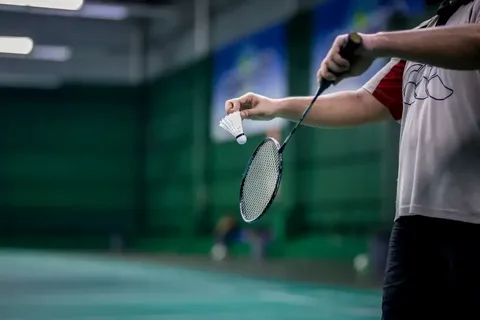
In doubles, the front player usually stands around the short service line, racket up in front of the body. In singles you approach the net from your central base, arriving with a lunge. In both cases, keep the racket head up so you can meet the shuttle as high as possible.
Grip
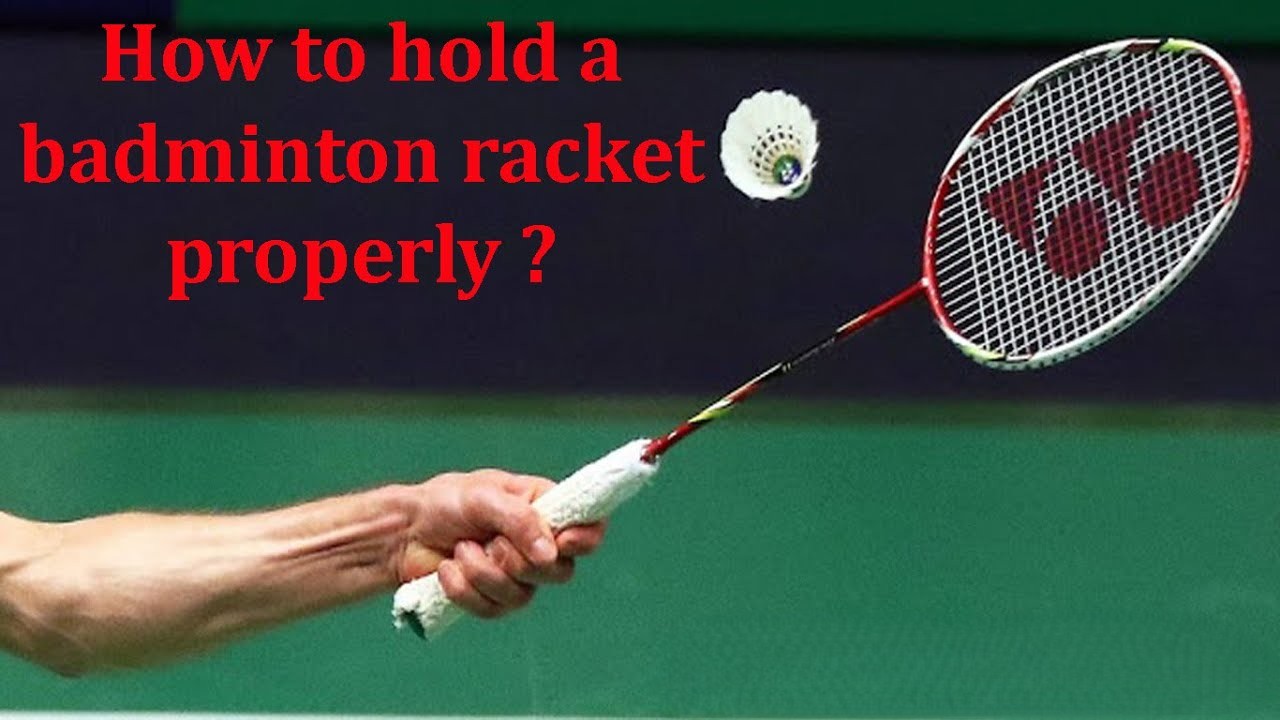
Use a relaxed forehand grip on the racket side and a backhand grip, with the thumb on the back bevel, on the non-racket side. Hold the racket mainly with the fingers. A soft grip absorbs the shuttle’s pace and lets you feel the contact; a tight grip makes the shuttle bounce up off the strings.
Contact
- Take it early and high. The closer to the top of the net you meet the shuttle, the more options you have and the less it needs to rise.
- Keep the swing tiny. Net shots are guided with a short push or a gentle lift from the fingers, not swung.
- Angle the face slightly up for a straight net shot, so the shuttle just clears the tape and falls steeply.
- Keep a short follow-through so the shuttle stays low.
Types of Net Shots
Straight Net Shot
The basic shot: the shuttle travels straight forward, just over the tape, and falls close to the net on the other side. It is the safest net shot and the one to master first.
Spinning (Tumbling) Net Shot
Brushing or slicing across the base of the shuttle at contact makes it tumble as it crosses the net. A tumbling shuttle is difficult to hit cleanly, so the opponent often has to lift or plays a loose reply. It requires very precise contact and is easiest to play when you meet the shuttle high.
Cross-Court Net Shot
The shuttle travels diagonally across the net to the opposite front corner. It makes the opponent move laterally, but it spends more time in the air and passes closer to their racket, so it is riskier than a straight net shot. Use it when the opponent has committed to the straight side.
Net Push
A flat, firm push from the front court into the opponent’s mid-court, often toward the sideline or past a front player in doubles. It is useful when the shuttle is too far below the tape for a good net shot but you do not want to lift.
Net Kill
When the shuttle comes up above the net, hit it down sharply with a short, quick action. Use a compact tap or a brushing motion rather than a big swing, both for speed and to avoid touching the net, which is a fault.
Net Lift
When the shuttle has dropped low, lift it high and deep to the rear court. A good net lift is not a failure; a short, flat lift is.
Footwork for the Front Court
- Split step as the opponent hits, so you can push off forward quickly.
- Lunge with the racket leg leading, knee over the ankle and toe pointing toward the shuttle.
- Keep the back leg extended for balance, and the body upright rather than bent over.
- Push back from the front foot immediately after the shot to recover.
Arriving early is the key. If you reach the shuttle while it is still near the tape, you can play a tight net shot; if you arrive late, you are usually forced to lift.
Deception at the Net
At the front, small changes are enough to wrong-foot an opponent:
- Hold the shot. Present the racket as if to play a net shot, pause, and lift or push once the opponent moves forward.
- Same preparation, different direction. Use one racket position for both straight and cross-court net shots and change the face angle at the last moment.
- Fake lift to net shot. Show a lifting action, then play a soft net shot instead.
Deception only works if the basic shots are consistent. Learn to play each net shot reliably before adding holds and fakes. For the principles of racket-face angle behind these changes of direction, see the guide on controlling shuttle direction.
Net Play in Doubles
In doubles, the front player’s job is to intercept anything that comes through the mid-court, play tight net shots and kill loose replies while the partner attacks from the back. The front player should generally avoid backing away from the net to chase shots that belong to the rear player. The serve is where much doubles net play begins: a low serve followed by an aggressive first net shot can decide the rally quickly. See the guides to forehand and backhand serve techniques and doubles positioning and communication for how this fits into team play.
Common Net Play Mistakes
- Swinging at net shots, which sends the shuttle too high or too long.
- Gripping tightly, which makes the shuttle bounce up off the strings.
- Letting the shuttle drop low before playing it.
- Bending at the waist instead of lunging, which hurts balance and recovery.
- Touching the net with the racket or body during a kill, which is a fault.
- Staying at the net after the shot instead of recovering.
Net Play Drills
1. Net Rally
Two players at the net play only net shots for two to three minutes. Count how many shots in a row stay inside the short service line.
2. Net Shot and Lift
One player plays net shots; the other alternates net shots and lifts. The net player must recover toward the centre after every shot.
3. Multi-Shuttle Front Court
A feeder throws shuttles quickly to the two front corners. Lunge, play a net shot, recover, repeat. Sets of 10 to 15 shuttles.
4. Kill on Command
The feeder sends a mix of tight and loose shuttles. Kill the loose ones and play net shots on the tight ones. This trains the decision as well as the stroke.
5. Spin Practice
From a high feed close to the tape, practise brushing across the shuttle to make it tumble. Start slowly and focus on clean contact.
Frequently Asked Questions
Can I reach over the net to play a shot?
No. You must make contact with the shuttle on your own side of the net, although your racket may follow through over the net after contact. Touching the net is a fault.
How high should a net shot cross the tape?
As low as you can manage reliably. The lower and tighter it crosses, the harder it is for the opponent to play anything except a lift.
When should I lift instead of playing a net shot?
When the shuttle has dropped well below the tape or you arrive late. A high, deep lift is safer than a loose net shot.