
Walk into any badminton shop or browse online and you will see hundreds of rackets that look similar but play very differently. The difference comes down to a handful of specifications: weight, balance, shaft flex, grip size and the string setup. Once you understand what each one does, choosing a racket becomes a matter of matching those numbers to your level and style rather than guessing from the marketing.
This guide explains each specification in plain terms, shows how to read the codes printed on a racket, and then points you to our more specific guides for beginners, juniors, intermediate players and different budgets.
Start With Your Level and How Often You Play
Before looking at any model, be honest about two things: how long you have been playing and how often you play. A racket that suits a club player who trains three times a week can feel heavy and unforgiving for someone who plays socially once a fortnight.
- New players (first year): prioritise a light, even-balanced or slightly head-light racket with a flexible shaft. It is easier to swing, kinder to the elbow and shoulder, and helps you learn clean technique. Our guide on choosing your first badminton racket walks through this step by step.
- Improving and intermediate players: once your strokes are consistent and you know whether you prefer attacking, defending or all-round play, you can choose a racket that supports that style. See our shortlist of rackets for intermediate players.
- Advanced players: stiffer shafts and more specialised balance points start to pay off, because you generate your own racket-head speed. These players usually already know the feel they want and test before buying.
- Children and teenagers: length, weight and grip size matter more than technology. Our guide to rackets for kids and teen players covers sizing by age.
Racket Weight: What the “U” Numbers Mean
Most brands print a weight class on the shaft or frame. Yonex and many other manufacturers use a “U” system, where a higher number means a lighter racket. The bands below follow Yonex’s classes and refer to the unstrung frame weight (Yonex quotes averages of about 88 g for 3U, 83 g for 4U and 78 g for 5U); other brands use similar but not identical bands:
| Class | Approximate unstrung weight | Typical user |
|---|---|---|
| 2U | 90–94 g | Strong players wanting maximum stability |
| 3U | 85–89 g | Intermediate and advanced players, many singles players |
| 4U | 80–84 g | The most versatile class; suits most club players |
| 5U | 75–79 g | Beginners, juniors and doubles players who value speed |
Strings, and any overgrip you add, put on several more grams, so a 4U racket ready to play typically weighs roughly 85–90 g. Lighter rackets are faster to recover between shots and easier on the arm; heavier rackets feel more stable on contact and can drive the shuttle deeper with the same swing. Exact ranges vary slightly by brand, so check the manufacturer’s specification sheet.
Balance Point: Head-Heavy, Even or Head-Light
Two rackets of the same weight can feel completely different because of where that weight sits. The balance point is usually quoted in millimetres from the butt of the handle.
Head-heavy
More mass in the frame gives extra momentum on smashes and clears from the back of the court. The trade-off is slower handling in fast exchanges and more load on the shoulder. Head-heavy rackets suit attacking singles players and strong back-court doubles players.
Even balance
An even balance is the safest all-round choice. It handles defence and net play reasonably well while still giving decent power. If you are unsure what style you play, start here.
Head-light
With more weight in the handle, the racket head feels quick and easy to whip around. This helps with drives, blocks, interceptions at the net and defending smashes. Head-light rackets are popular with doubles front-court players, but you need to generate more of your own power on overhead shots.
Shaft Flex: Flexible, Medium or Stiff
The shaft bends during the swing and straightens just before contact, adding a little extra speed to the racket head.
- Flexible shafts help players with slower or developing swings get length on clears and lifts. They feel forgiving, but timing can feel slightly delayed.
- Medium flex is a good middle ground for improving players.
- Stiff shafts return energy quickly and give precise direction, but only when the swing is fast and well timed. For players without that swing speed, a stiff racket feels “dead” and makes clears hard work.
A common mistake is buying a stiff, head-heavy flagship because a top professional uses it. Those rackets are designed for elite swing speeds; most recreational players get better results from something more flexible.
Grip Size and Handle Feel
Grip size is printed next to the weight, for example “4UG5”. In the Yonex and Victor systems, a higher G number means a thinner handle, so G5 is thinner than G4. Other brands use their own labels, so compare actual measurements where possible.
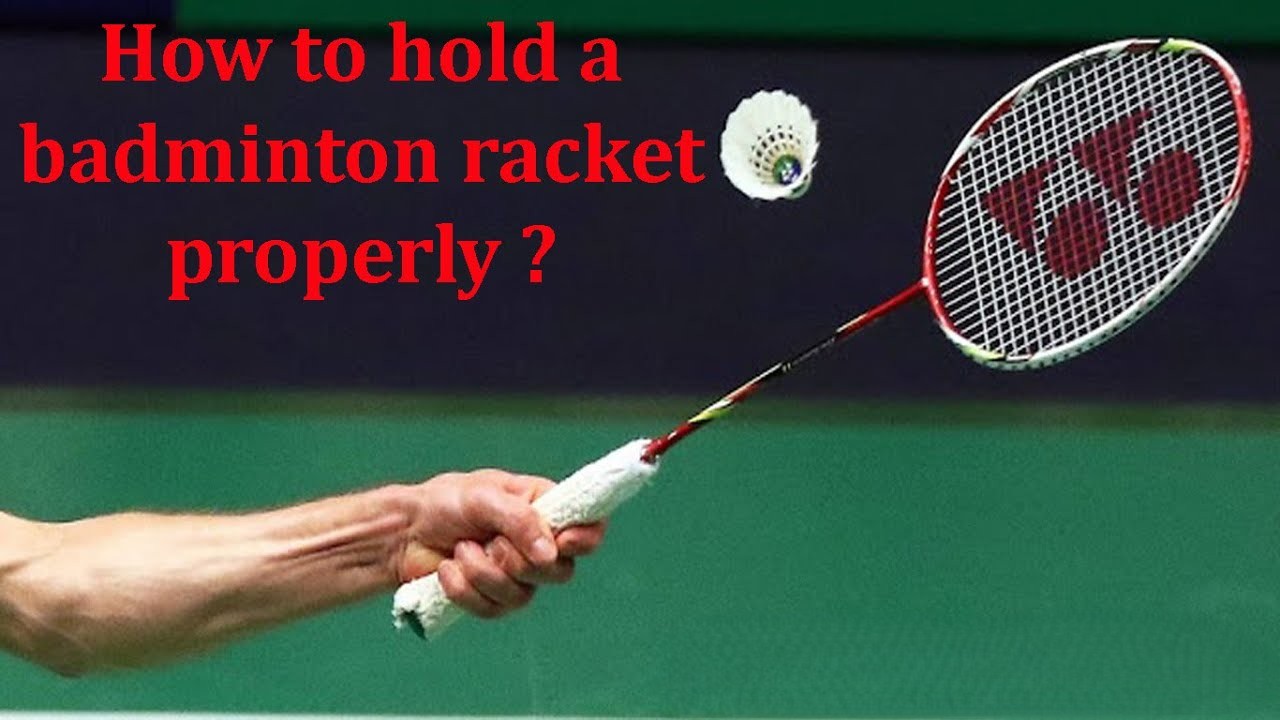
A thinner grip allows quicker finger and wrist adjustments, which helps with grip changes and deception. A thicker grip can feel more stable for players with large hands. Because overgrips add thickness, many players buy a thinner handle and build it up to taste. A quick check: hold the racket in a relaxed forehand grip; if your fingertips dig hard into your palm the handle is too thin, and if there is a wide gap the handle is too thick.
Frame Material, Shape and the Rules
Almost every serious racket today uses a graphite (carbon fibre) frame and shaft. Cheaper aluminium or steel rackets are heavier and less responsive; they are fine for garden games but limit progress if you play regularly.
Most modern frames use an isometric (squarer) head shape, which widens the sweet spot compared with older oval heads. The Laws of Badminton published by the Badminton World Federation limit the overall racket length to 680 mm and the width to 230 mm, so all legal rackets fall within a narrow size range; the differences you feel come mostly from weight, balance and stiffness.
Strings and Tension Are Part of the Racket
The string bed is the only part of the racket that touches the shuttle, so a good frame with tired or badly chosen strings will play poorly. Factory-strung rackets usually come with a durable string at a moderate tension, which is fine for beginners. As you improve, the string model and the tension become tuning tools of their own. Change one variable at a time so you can tell what made the difference, and always stay within the maximum tension the manufacturer prints on the frame or shaft.
Setting a Budget
Price rises with materials, construction and brand positioning, but the on-court benefit does not rise at the same rate. Recreational and improving players get most of the available performance in the lower and middle price bands; the extra cost of flagship rackets mainly benefits players with advanced technique. If you are working to a fixed amount, compare our guides to budget rackets under $50 and rackets under $100. If you are choosing between the big manufacturers, our Yonex vs Li-Ning vs Victor comparison explains how their model lines differ.
Prices change often and differ by country, so treat any price range as a guide and check a reputable retailer near you. Be cautious with prices far below the usual market rate, because counterfeit copies of popular models are common.
A Quick Checklist Before You Buy
- Decide your level and main format (singles, doubles or both).
- Pick a weight class: 4U or 5U for most players, 3U if you are strong and play a lot of singles.
- Choose a balance that matches your style, or even balance if you are unsure.
- Match shaft flex to your swing speed, not to what professionals use.
- Check the grip size and plan to add an overgrip.
- Note the maximum recommended string tension printed on the frame.
- If possible, swing the racket or borrow a similar model before buying.
Frequently Asked Questions
Does an expensive racket make you a better player?
Not on its own. A well-matched mid-priced racket will help more than an expensive one that is too stiff or too head-heavy for your swing. Coaching and regular play improve your game far more than equipment.
Should beginners buy a head-heavy racket for power?
Usually not. Power in badminton comes mainly from technique, timing and racket-head speed. A lighter, even-balanced racket lets beginners swing faster and learn the correct movement.
How long does a racket last?
A graphite frame can last for years with sensible care. Frames usually break from clashes with a partner’s racket, hitting the floor, or stringing above the recommended tension, rather than from normal play.
Is one racket enough?
For casual players, yes. Players who compete or train often usually keep a second racket with a similar setup so a broken string does not end their session.