
Badminton is one of the easiest racket sports to start and one of the hardest to master. You can rally with a friend within minutes of picking up a racket, yet the same game played at club or international level demands sharp footwork, fast reactions and real tactical thinking. This guide is a starting point for complete beginners. It explains what the game is, what you need, which skills to learn first and how to structure your first few weeks of practice. Where a topic deserves more detail, you will find a link to a dedicated guide.
What Badminton Is: The Game in One Minute
Badminton is played on a rectangular indoor court divided by a net. Players use light rackets to hit a shuttlecock (also called a shuttle or birdie) over the net so that it lands inside the opponent’s court, or so that the opponent cannot return it legally. The shuttle must not touch the floor on your side, and each side may hit it only once before it goes back over the net.
There are five standard events:
- Men’s singles and women’s singles – one player per side.
- Men’s doubles, women’s doubles and mixed doubles – two players per side.
Singles rewards fitness, patience and shot placement because one player covers the whole court. Doubles is faster and more attacking, with partners rotating between the front and back of the court.
The Basic Rules Every Beginner Should Know
You do not need to memorise the full Laws of Badminton before your first game, but these essentials will let you play a proper match:
- Rally scoring: every rally wins a point, whoever served.
- Games to 21: a game is won by the first side to 21 points with a lead of at least two. If the score reaches 20–20, play continues until one side is two points clear, up to a maximum of 30. At 29–29 the next point wins. This 21-point format applies until the end of 2026: from 4 January 2027, the BWF’s new 3×15 scoring system takes over, with games to 15 points, a two-point lead needed from 14–14, and a cap at 21.
- Best of three games: the first side to win two games wins the match.
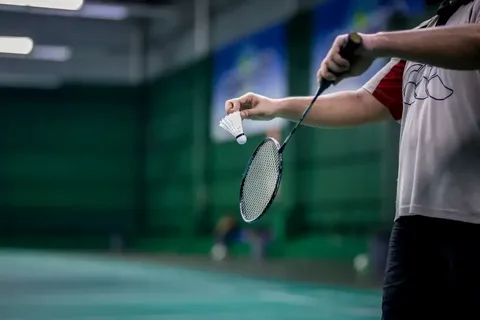
- Serving: the serve is hit underarm and diagonally into the opponent’s service court. Under current BWF Laws, the whole shuttle must be below 1.15 m from the floor when it is struck.
- Lines are in: a shuttle landing on a line counts as in.
- No touching the net: touching the net or posts with your racket, body or clothing while the shuttle is in play is a fault.
For the full scoring system, serving order in doubles, intervals and changing ends, read our badminton rules and scoring guide. If you want to understand exactly what counts as an illegal serve or contact, our complete guide to badminton faults covers each one.
Know Your Lines
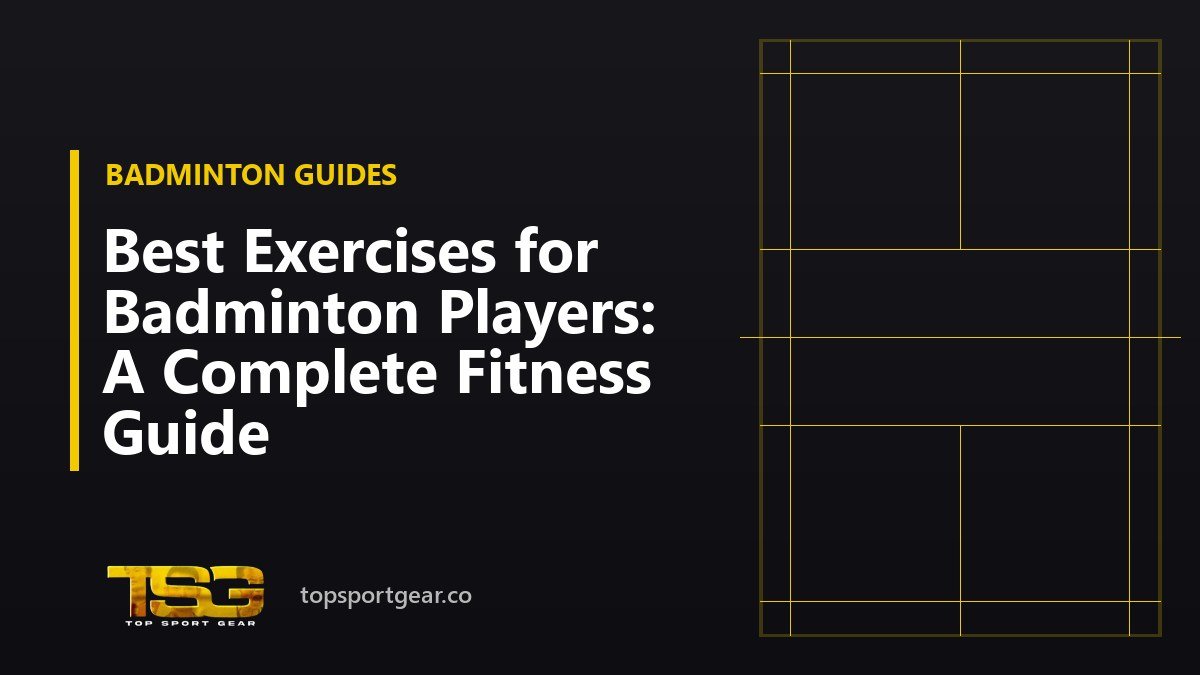
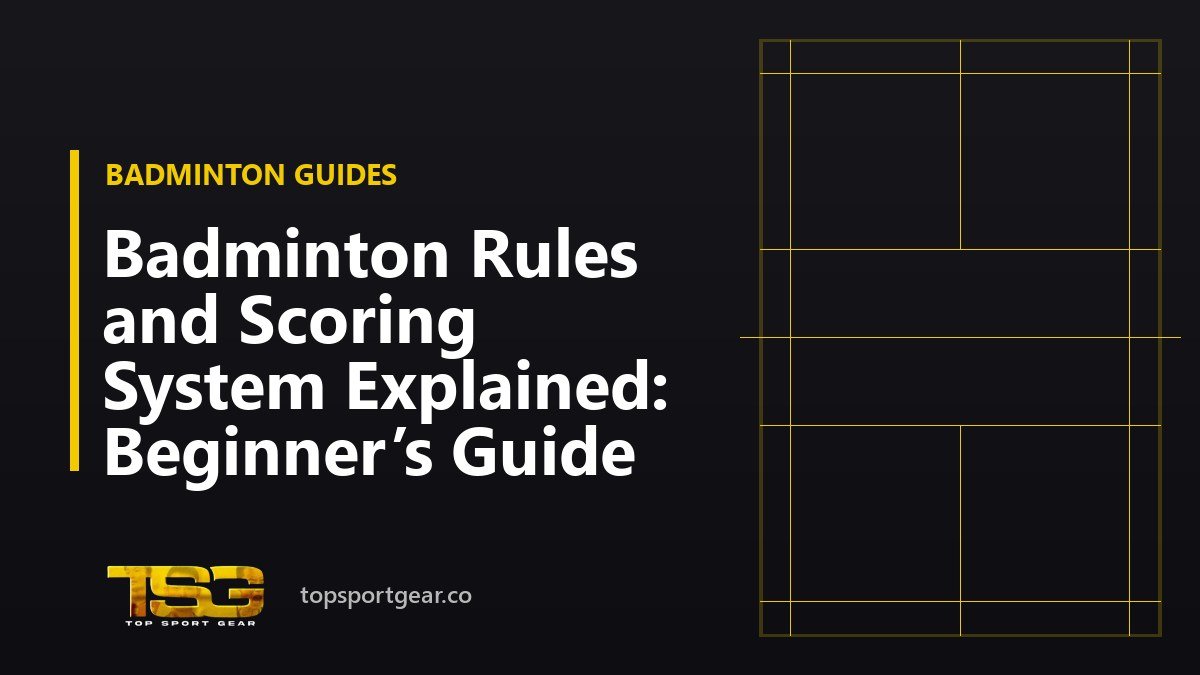
The biggest source of confusion for new players is the court markings. A full court is 13.4 m long and 6.1 m wide. In singles, the inner side lines are used, so the court is 5.18 m wide, but the full length to the back boundary is in play. In doubles, the outer side lines are used. For the serve only, doubles uses a shorter service area that ends at the long service line, 0.76 m in front of the back boundary. Our badminton court dimensions guide walks through every line and measurement.
Equipment You Need to Start
Badminton is inexpensive to start. You need three things, plus comfortable sports clothing.
Racket
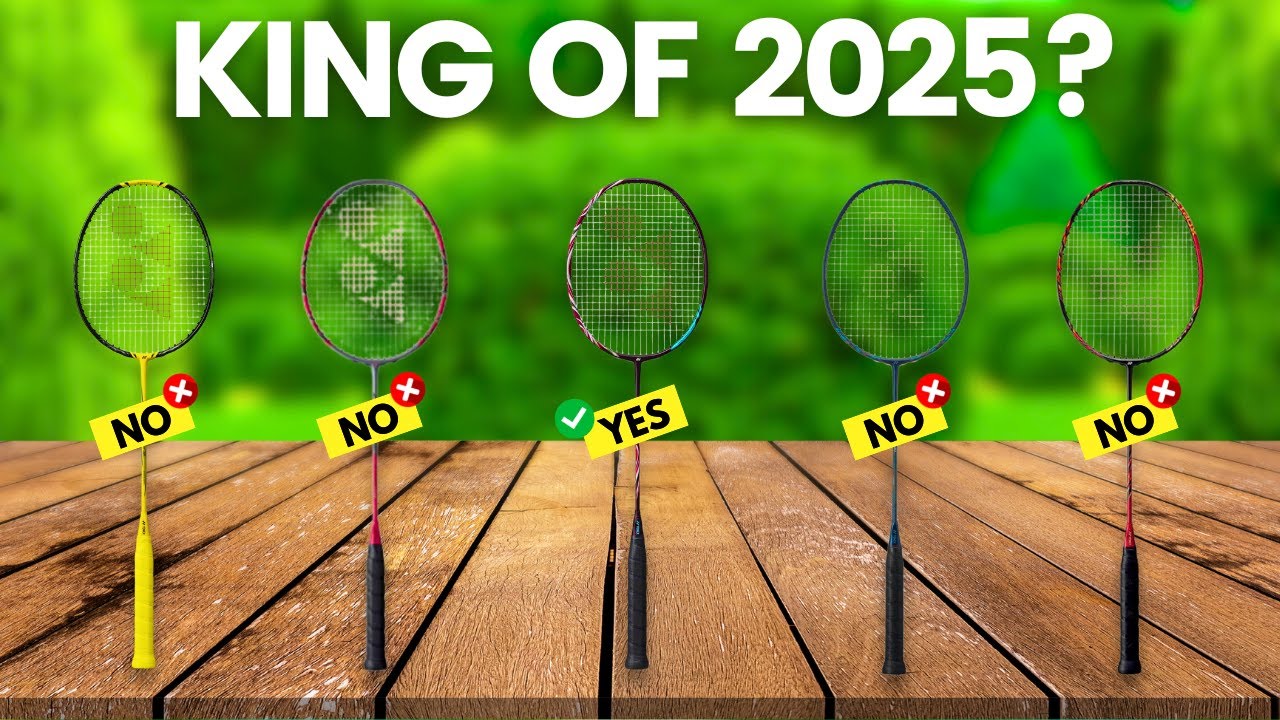
Most adult rackets weigh roughly 75–95 g without strings. For a beginner, a light to medium racket with an even balance and a flexible or medium-flex shaft is the most forgiving choice. It is easier to swing, helps you develop timing and puts less strain on your wrist and shoulder. Avoid very head-heavy, stiff rackets designed for advanced attacking players. Our guide on how to choose your first badminton racket explains weight, balance and flex in more detail.
Shuttlecocks
Nylon (plastic) shuttles are durable and economical, which makes them ideal for learning and casual play. Feather shuttles fly with a more precise, consistent trajectory and are used in competitive play, but they break more easily. Many clubs use feather shuttles, so check what your venue expects.
Shoes
Wear indoor court shoes with non-marking gum or rubber soles. Running shoes are designed for forward motion and often have thick, narrow heels, which raises the risk of rolling an ankle during sideways movement. Proper court shoes give grip, a low profile and lateral support.
The First Skills to Learn
Beginners improve fastest when they learn a small number of fundamentals well rather than trying every shot at once. Work on these in roughly this order.
1. Grip
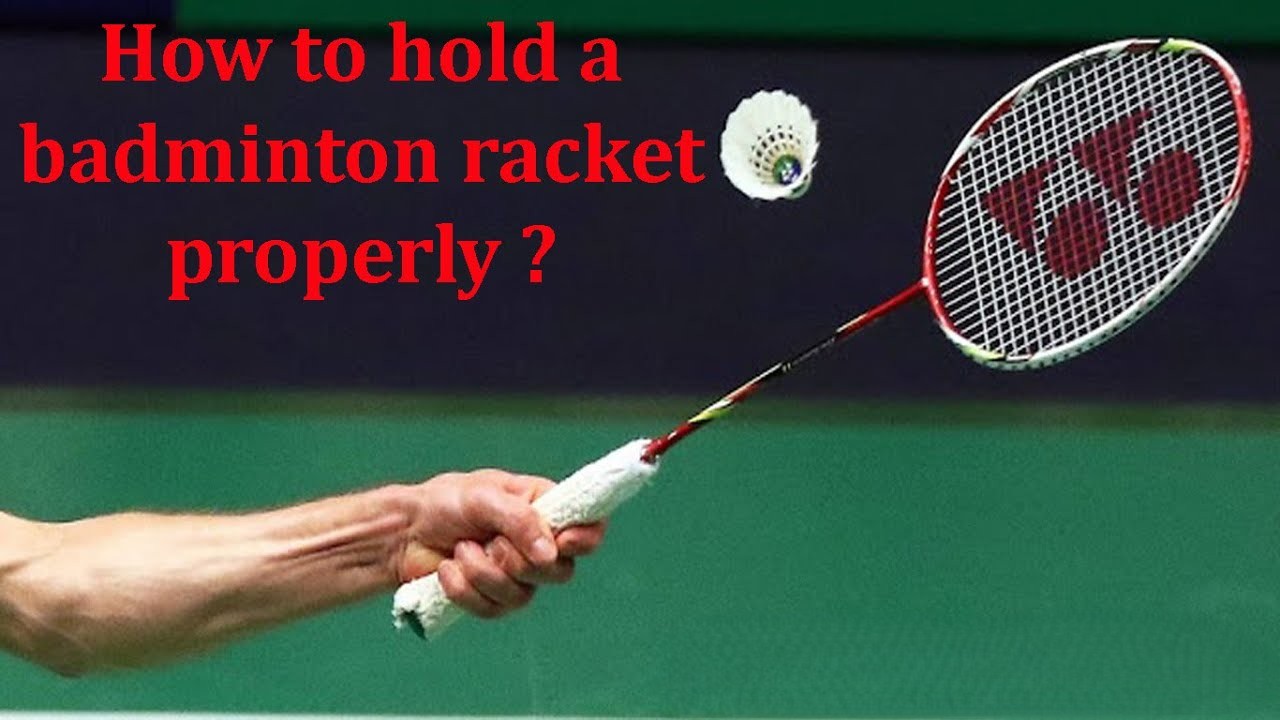
Hold the racket as if you are shaking hands with it, with a relaxed hand. Use the forehand grip for shots on your racket side and shift your thumb up behind the handle for the backhand grip. Squeezing tightly all the time slows your reactions and reduces power. Our guide on how to hold a badminton racket properly shows both grips step by step.
2. Ready Position
Stand with feet about shoulder-width apart, knees slightly bent, weight on the balls of your feet and racket held up in front of you. Returning to this position after every shot is what lets you reach the next one.
3. Serve
Learn two serves first. The low serve (usually backhand) skims just over the net and lands near the short service line; it is the standard serve in doubles. The high serve (usually forehand) goes high and deep to the back of the opponent’s court; it is common in singles. Consistency matters more than speed – a serve that lands in every time is worth more than an occasional winner.
4. Basic Strokes
- Clear: a high, deep shot to the back of the court that buys you time.
- Drop shot: a gentle shot from the back that falls just over the net.
- Smash: a steep, fast downward attacking shot.
- Net shot: a soft touch from the front of the court that tumbles over the net.
- Drive: a flat, fast shot at about shoulder height, used a lot in doubles.
5. Footwork
Good players are rarely rushing because they move efficiently: a small split-step as the opponent hits, a few large steps or a chassé to the shuttle, a stable lunge at the front, and a quick recovery towards the centre. Footwork is worth practising separately, without a shuttle, a few minutes at a time.
A Simple Four-Week Plan for Beginners
Two or three sessions a week of 45–60 minutes is plenty at the start. A sample progression:
- Week 1: grip, ready position and gentle rallies in the middle of the court. Aim for long, controlled rallies rather than winners.
- Week 2: add the high serve and low serve, and practise the clear from the back of the court.
- Week 3: add drop shots and net shots. Play a half-court game where only shots into one side count, which forces accuracy.
- Week 4: introduce the smash, basic footwork patterns to the four corners and short practice matches using proper scoring.
Always begin with a five to ten minute warm-up (light jogging, skipping, dynamic leg swings and arm circles) and finish with easy stretching. Badminton involves sudden lunges and jumps, and cold muscles are more easily strained.
Common Beginner Problems and Quick Fixes
- Shuttle keeps falling short from the back: you are probably hitting late and with a stiff arm. Get behind the shuttle earlier and use a relaxed throwing action.
- Constantly arriving late: you are not recovering to the centre. After each shot, take one or two steps back to your base.
- Serves going into the net: slow down, drop the shuttle from the same place every time and push through the shuttle rather than flicking.
- Sore wrist or elbow: check your grip pressure and racket weight; a heavy, stiff racket gripped tightly is a common cause.
We cover these and other habits in much more depth in our article on the most common mistakes beginners make in badminton.
Frequently Asked Questions
Is badminton easy to learn?
The basics are easy: most people can rally within one session. Playing well takes longer, because technique, footwork and tactics all need time. With regular practice, most beginners can play enjoyable matches within a few weeks.
Do I need lessons?
Not to start, but even a few sessions with a qualified coach can prevent bad habits in grip and footwork that are hard to fix later. Many clubs run beginner sessions.
Can I play badminton outdoors?
Yes, for fun, but the shuttle is very light and even a gentle breeze affects it. Competitive badminton is played indoors.
Should I start with singles or doubles?
Doubles is usually more sociable and less tiring for beginners, while singles teaches you to cover the whole court. Playing both is ideal.