
Badminton can look like a gentle garden game, but the sport has a long history, some remarkable physics and a few records that surprise even regular players. Here are ten facts about badminton – checked against reliable sources – that show why it is one of the most fascinating sports to play and watch.
Speed and Physics
1. Badminton Holds the Record for the Fastest Racket-Sport Shot
No other racket sport produces a faster shot off the racket than a badminton smash. In April 2023, India’s Satwiksairaj Rankireddy was recognised by Guinness World Records for a hit measured at 565 km/h in a controlled test at Yonex’s factory in Japan. Competition smashes are tracked separately. Fu Haifeng of China set an early benchmark with 332 km/h at the 2005 Sudirman Cup; Lee Chong Wei was later clocked at 408 km/h at the 2015 Hong Kong Open, and Guinness’s current competition record is 426 km/h by Denmark’s Mads Pieler Kolding in a Premier Badminton League match in India in January 2017. In match play, the hardest smashes by elite men are regularly measured at well over 300 km/h.
2. The Shuttle Slows Down Faster Than Almost Any Other Projectile
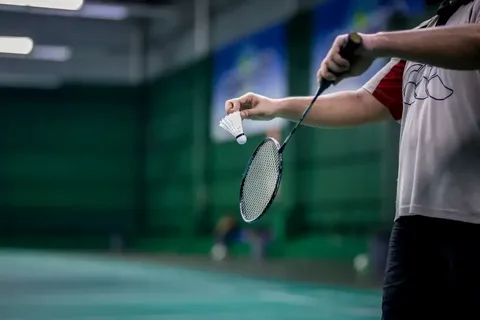
A shuttlecock may leave the racket at extreme speed, but its feather or nylon skirt creates enormous air resistance. It loses most of its speed within a very short distance, which is why it turns over and drops steeply at the end of a clear. This rapid deceleration is what makes badminton playable: without it, smashes would be almost impossible to return. It also explains why a shuttle’s flight is so sensitive to wind, and why competitive badminton is played indoors.
3. A Shuttle Weighs Only About 5 Grams
Under BWF Laws, a shuttle must weigh between 4.74 g and 5.50 g – about the same as a single sheet of A4 paper or a little more. Shuttles are also graded by speed, and players test them before a match by hitting a full underarm stroke from the back line; a correct-speed shuttle should land within a set distance short of the opposite back boundary. Temperature, humidity and altitude all affect how fast a shuttle flies, which is why different speed grades exist.
Equipment Facts
4. A Feather Shuttle Has 16 Feathers – Usually From the Same Wing Side
The Laws specify that a feather shuttle has 16 feathers fixed in a cork base covered with a thin layer of leather. Manufacturers typically select feathers from the same wing side of geese or ducks so that they curve the same way, which helps the shuttle spin consistently in flight. Goose feathers are generally considered more durable than duck feathers. The feathers are not all taken from one bird: they are sorted and matched in large batches.
5. Top Matches Get Through Many Shuttles
Feather shuttles are delicate. At elite level, players change the shuttle whenever its flight is affected by damage, and in fast men’s matches that can mean a fresh shuttle every few rallies. A single match can use dozens of shuttles. That is one reason nylon shuttles are popular for training and recreational play – our comparison of feather vs nylon shuttlecocks explains the trade-offs.
History Facts
6. The Game Is Named After a House in England
Games with a shuttlecock and bat, often called battledore and shuttlecock, were played for centuries in Europe and Asia. The modern competitive game developed in the 19th century, when British army officers in India added a net and rules. It took its name from Badminton House in Gloucestershire, the estate of the Duke of Beaufort, where the game was played in the 1870s. The Badminton Association of England published standard rules in 1893.
7. Badminton Has Been an Olympic Sport Since 1992
Badminton appeared as a demonstration sport at the 1972 Munich Olympics and as an exhibition sport at the 1988 Seoul Games, before becoming a full medal sport at Barcelona 1992. Mixed doubles was added in 1996. China has won more Olympic badminton medals than any other country, with Indonesia and South Korea also very successful. Read more in our brief history of Olympic badminton.
8. Badminton Has Deep Roots in South Asia
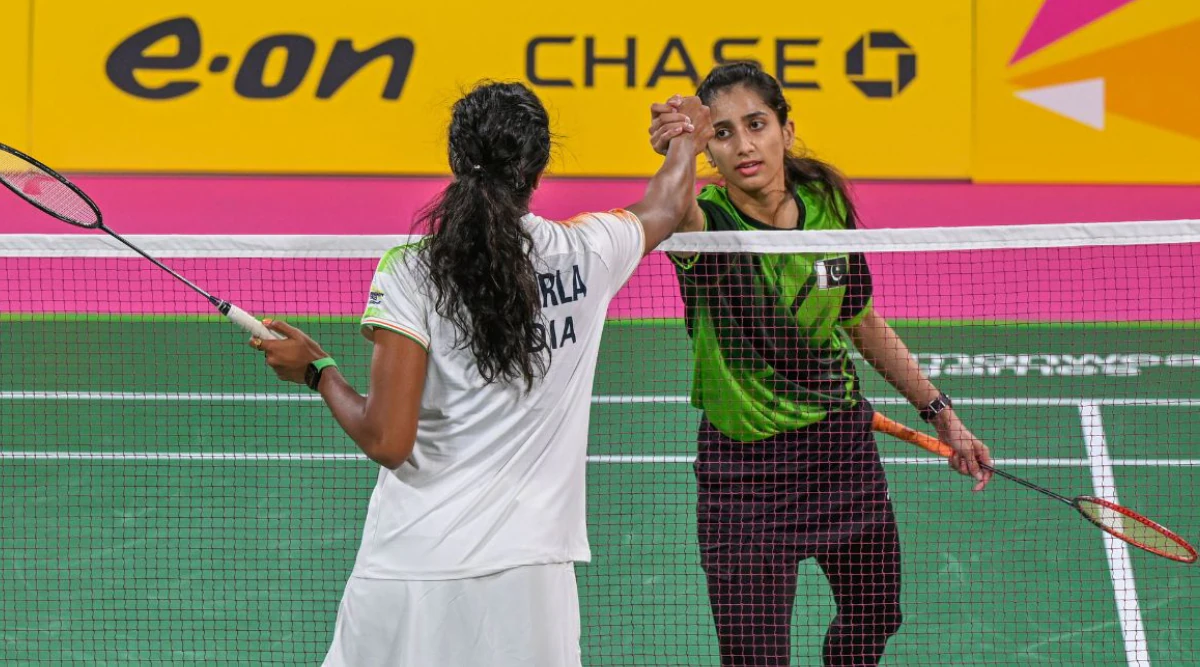
Because the modern rules took shape among officers stationed in India, badminton spread early through the subcontinent’s schools, clubs and military stations. That legacy is still visible today, in India’s emergence as a major badminton nation and in the sport’s long history in countries such as Pakistan. Our article on the history of badminton in Pakistan traces one part of that story.
Records and Culture
9. One of the Shortest Recorded Matches Lasted Six Minutes
The shortest international match on record is usually given as a 1996 Uber Cup encounter in Hong Kong, in which South Korea’s Ra Kyung-min beat England’s Julia Mann 11-2, 11-1 in about six minutes. It was played under the old scoring system, when women’s singles games were played to 11 points. At the other extreme, three-game matches at the top level can last well over an hour, and elite rallies occasionally exceed 100 shots: a women’s doubles rally at the 2023 Malaysia Masters was reported at 211 shots.
10. In Some Countries, Badminton Stars Are National Heroes
In Indonesia, Malaysia, China, Denmark, India and other countries, badminton is a major spectator sport, and top players are household names. Indonesia’s first Olympic gold medals came in badminton at Barcelona 1992, won by Susi Susanti and Alan Budikusuma. Malaysia’s Lee Chong Wei, who held the world number one ranking for long periods, became one of the most famous athletes in the country’s history. Major tournaments in these countries fill arenas with famously loud crowds.
Bonus: Badminton Is Faster Than It Looks to Play
Because the court is small and the shuttle so quick off the racket, badminton is one of the most reaction-intensive racket sports. That is also why comparisons with tennis are so interesting – see our article on badminton vs tennis. If these facts have inspired you to pick up a racket, start with our beginner’s guide to playing badminton.
Frequently Asked Questions
What is the fastest badminton smash ever recorded?
The Guinness World Records figure is 565 km/h, set by Satwiksairaj Rankireddy of India in a controlled test in 2023.
How many feathers are in a shuttlecock?
Sixteen, fixed into a cork base.
When did badminton become an Olympic sport?
At the 1992 Barcelona Olympics, after appearing as a demonstration sport in 1972 and an exhibition sport in 1988.