
Last Updated: February 2026 | Reading Time: 10 minutes
During my first club match, I hit what I thought was a perfect serve. The referee called it a fault and gave the point to my opponent.
I was confused. “What did I do wrong?” I asked.
The referee explained something about my racket angle at contact. I didn’t fully understand, but I learned an important lesson: badminton has specific rules about faults, and not knowing them cost me points.
That day, I realized I needed to understand badminton rules deeply. Not just the basic scoring system, but the specific violations that result in faults. Some rules seem strict and arbitrary at first—like your racket angle during a serve. But they exist for good reasons, and they’re consistent worldwide.
In this comprehensive guide, I’ll explain every type of fault in badminton. You’ll understand not just what constitutes a fault, but why the rules exist. You’ll learn how to avoid faults in your own play and understand what to look for when officiating or watching matches.
By the end, badminton rules will make sense, and you’ll be confident in your understanding of what’s fair play and what’s not.
What Is a Fault?
A fault is a violation of the rules that results in the loss of a rally. Whoever commits the fault loses that point to their opponent.
In doubles, a fault by one player doesn’t affect their partner—only that player loses their serving turn (in most faults during serve).
Key Point: A fault immediately ends the rally and awards the point to the opponent.
Types of Faults in Badminton
Badminton faults fall into several categories. Let’s examine each one in detail.
Service Faults (Most Important Category)
Service faults are the most common violations. Many players unknowingly commit service faults without realizing it.
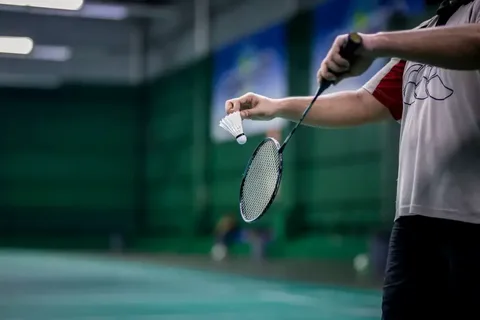
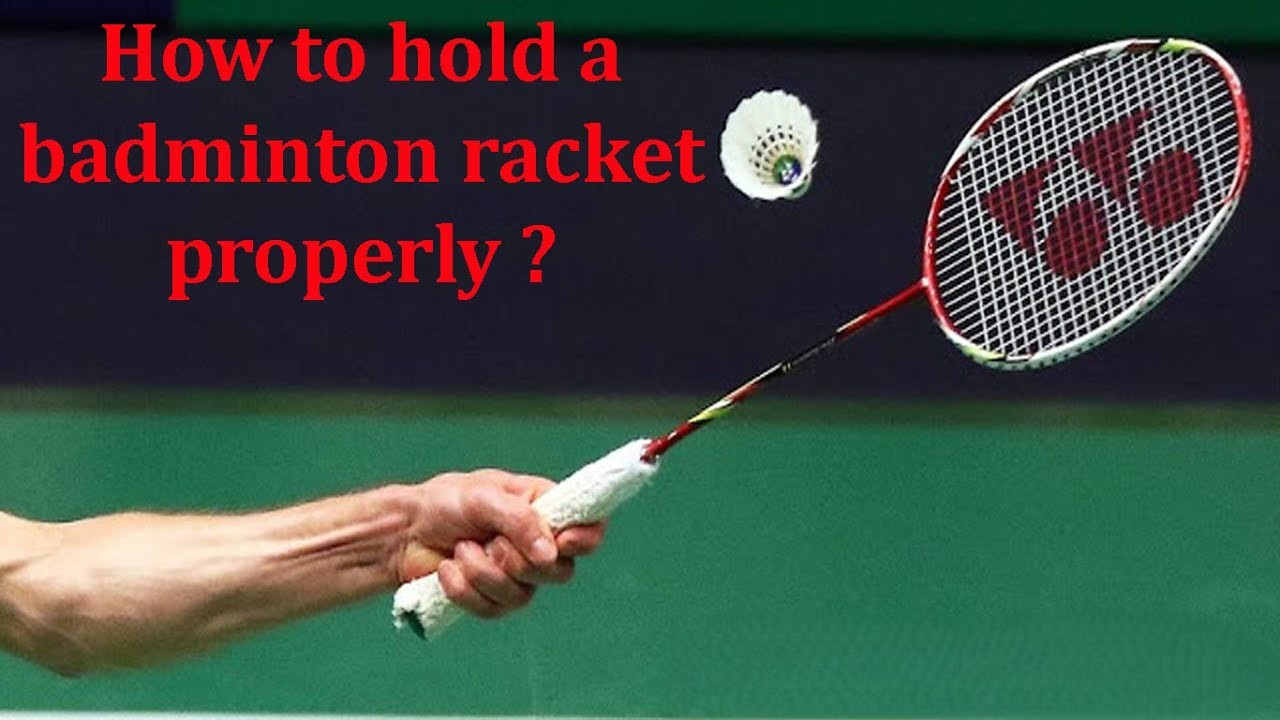
Fault 1: Racket Head Above Hands
Rule: At the moment of contact with the shuttle, your racket head must be below your hands.
What This Means:
- Your hand holding the racket grip is higher than the head (top) of the racket
- The strings of the racket face should be angled downward toward the ground
- Your wrist can’t be bent back, flipping the racket head upward
Why This Rule Exists: Prevents powerful overhead serves that would be nearly impossible to return. Keeps serves defensive and lower-power.
How to Check Your Serve: Video record yourself serving. At the moment of contact, your hand should be higher than the racket head. If the racket head is above your hands, you’re committing a fault.
Common Mistake: Beginners often bend their wrist back during the serve, flipping the racket head upward. This is a fault every single time.
Fault 2: Racket Moves Upward
Rule: The racket and arm must be moving downward (or at least stationary) at the moment of contact. The racket can’t be moving upward.
What This Means:
- Your serving arm must be moving downward when you hit the shuttle
- You can’t push the racket upward to make contact
- The motion must be one continuous downward path
Why This Rule Exists: Prevents powerful serves by requiring a controlled, downward motion rather than an upward strike.
How to Check: During your serve, the racket shaft should be angled downward, not upward. If someone were to freeze your motion at contact, your arm should be in a downward-moving position.
Fault 3: Shuttle Not Below Waist Height
Rule: At the moment of contact during a serve, the shuttle must be at or below waist height.
What This Means:
- The shuttle you’re hitting must be below your waist
- High serves (above waist level) are faults
- The shuttle should be approximately at hip level or lower
Why This Rule Exists: Keeps serves low and defensive. Prevents high serves that would give too much advantage to the server.
Visual Check: Imagine a horizontal line across your waist. The shuttle should be below this line when you make contact.
Fault 4: Short Service Line Violation
Rule: The serve must land beyond the short service line. Landing on or before the short service line is a fault.
What This Means:
- The shuttle must clear the short service line
- The short service line is 1.98 meters (6.5 feet) from the net
- If the shuttle lands on the line, it’s IN (the line is part of the court)
- But the shuttle must land BEYOND the line, not on it during serves
Why This Rule Exists: Prevents easy ace serves. Requires serves to clear a minimum distance.
Fault 5: Serve Outside Service Court Boundaries
Rule: The shuttle must land within the service court boundaries (singles or doubles depending on match type).
What This Means:
- In singles: Shuttle must land within the inner sidelines and between short service line and baseline
- In doubles: Shuttle must land within outer sidelines and between short service line and long service line
- Outside these boundaries is a fault
Fault 6: Double Service Fault
Rule: In singles, you get one serve attempt. In doubles, the first partner serves until their team loses a rally, then the second partner serves.
What This Means:
- If you serve and it’s a fault, you don’t get another attempt (in singles)
- In doubles with two servers per side, you lose your serve after one fault
- No “second chances” on serves
Exception: In some recreational play, two serves per point (like tennis) is sometimes used. Check local rules.
Contact Faults
These faults happen when you’re hitting the shuttle (not just serving).
Fault 7: Hitting Shuttle Above Net Level While at Net
Rule: If you’re at the net in front of the net line, you can’t hit the shuttle above net level with a downward stroke.
What This Means:
- If you’re positioned in front of the net (closer to net than opponent)
- And the shuttle is above net level
- You can’t hit it with a downward stroke
- You can hit it if it’s below net level, or if you’re behind the net line
Why This Rule Exists: Prevents unfair net kills. If you’re at the net with shuttle above net level, you have too much advantage hitting downward.
Common Scenario: You’re at net, opponent hits a shuttle that rises above net level as it comes toward you. You can hit it, but only with an upward or level stroke, not a downward putaway.
Fault 8: Hitting Shuttle Before It Crosses Net
Rule: You must hit the shuttle on your side of the net. Reaching across the net to hit it is a fault.
What This Means:
- Your racket must not cross the net line before or during contact
- You can’t reach over the net to hit the shuttle
- You must let the shuttle come to your side of the net
Exception: Your racket can follow through across the net AFTER you’ve made contact on your side.
Fault 9: Double Hit (Hitting Twice)
Rule: You can’t hit the shuttle twice in succession with your racket. One hit per shot.
What This Means:
- One strike with your racket per shot attempt
- If the shuttle hits the racket twice (due to mishit), it’s a fault
- The shuttle can’t brush the strings twice
Common Mistake: When beginners mistakenly hit the shuttle with the edge of their racket, it can make contact twice. This is a fault.
Footwork and Positioning Faults
Fault 10: Server’s Feet Not Stationary
Rule: During the serve, the server’s feet must not move. Both feet must remain stationary.
What This Means:
- Your feet can’t step or move during the serve motion
- You must serve from a stationary position
- Feet can’t leave the ground
Why This Rule Exists: Keeps serves consistent and prevents serves from moving positions unfairly.
Fault 11: Server’s Feet Not Behind Service Line
Rule: The server must stand behind the back service line (baseline during serve).
What This Means:
- During serve, your feet must be in the area behind the baseline
- You can’t stand inside the court during serve
- Your service motion must originate from behind the line
Fault 12: Receiver Not Ready
Rule: The receiver must be in ready position during the serve. If receiver signals not ready and server serves anyway, server commits a fault.
What This Means:
- Receiver has the right to indicate they’re not ready
- If they signal “not ready” (raising hand), server must wait
- If server serves when receiver signals not ready, it’s a fault
- Receiver has to be reasonably quick about getting ready
Court Boundary Faults
Fault 13: Shuttle Landing Out of Bounds During Rally
Rule: If the shuttle lands outside the court boundaries during a rally, it’s a fault by whoever hit it out.
What This Means:
- Shuttle must land within the court lines
- Landing outside the sidelines is out
- Landing beyond the baseline is out
- Landing before the short service line (during service) is out
Net Faults
Fault 14: Shuttle Hitting the Net on Serve
Rule: If the shuttle hits the net during a serve, it’s a fault. The shuttle must clear the net.
What This Means:
- Serve must clear the net completely
- If it touches the net, it’s a fault
- The shuttle must pass over the net to the opponent’s court
Fault 15: Racket Hitting the Net
Rule: During play, if your racket hits the net, it’s a fault.
What This Means:
- Your racket can’t contact the net
- Even accidentally touching the net with your racket is a fault
- This includes the net post
Exception: Your racket can pass over the net after you’ve hit the shuttle on your side.
Fault 16: Player Touching the Net
Rule: During play, you can’t touch the net with any part of your body.
What This Means:
- No touching the net with hands, body, clothing, or anything attached to you
- Even slight contact is a fault
- This includes the net post
Exception: After the rally ends, you can touch the net.
Less Common but Important Faults
Fault 17: Continuous Stroke (Throwing)
Rule: You must use a hitting motion. You can’t throw the shuttle.
What This Means:
- You must strike the shuttle with a sharp, distinct motion
- You can’t carry the shuttle on your strings and then throw it
- The motion must be a hitting motion, not a throwing motion
Why This Rule Exists: Badminton requires hitting, not throwing. This distinction keeps it fundamentally different from other racket sports.
Fault 18: Distraction or Hindrance
Rule: You can’t distract or hinder your opponent during play.
What This Means:
- You can’t make sudden movements to distract
- You can’t shout or make noise to distract
- You can’t block your opponent’s vision unfairly
- You must allow fair court access
Fault 19: Touching Shuttle Before It’s Dead
Rule: During play, you can’t touch the shuttle while it’s still in play with any part of your body except the racket.
What This Means:
- You can only hit it with the racket
- You can’t catch it or touch it with your hands
- You can’t use any body part except the racket to contact the shuttle
Common Faults by Situation
During Serving
Most common: Racket head above hands, shuttle above waist level, shuttle landing short
At the Net
Most common: Hitting shuttle above net level with downward stroke, touching the net, racket hitting the net
During Rally
Most common: Shuttle landing out of bounds, double hit, touching the net
In Doubles
Specific: Confusion about who serves next after a fault, incorrect serving order
How Faults Are Called
In Official Play:
Referee or umpire watches the court and calls faults they observe. The decision is final unless challenged through official appeal procedures.
In Casual Play:
Players are responsible for calling faults on their side of the court. Honesty and good sportsmanship are expected.
Frequently Asked Questions
Q: If my serve touches the net but goes over and lands in the service court, is it in or a fault? A: It’s a fault. The shuttle must clear the net without touching it. If it touches the net, it’s a fault regardless of where it lands.
Q: Can my feet be partially on the baseline when I serve? A: No, your feet must be completely behind the baseline. Even partial contact with the baseline or closer is a fault.
Q: If I hit the shuttle and it bounces off my racket and I hit it again in the same motion, is that a double hit? A: If it’s a continuous motion without a clear separation between hits, it might be allowed. But if there’s a distinct second hit, it’s a fault.
Q: If the shuttle clips the net tape and comes back to my side, what happens? A: During service, it’s a fault. During a rally, play continues and your opponent hasn’t hit it over the net yet, so you can hit it again.
Q: What if I accidentally step on the baseline after I’ve served but before the shuttle lands? A: Once you’ve made contact with the shuttle in your serve, you can move. Stepping on the baseline after contact is fine.
Q: Can I move my feet while preparing to serve, before I strike? A: No, your feet must be stationary at the moment of contact. You can move to position yourself, but you must be stationary when you hit the shuttle.
Q: If my opponent touches the net after the rally ends, is it a fault? A: No, once the rally is over, you can touch the net. The rule only applies during play.
Q: What if I hit the shuttle and it hits my body, then goes over the net? A: It’s a fault. Once the shuttle leaves your racket, if any part of your body (other than accidental brush) contacts it, that’s a fault.
Q: Can I call a fault on my opponent in casual play? A: Yes, any player can call a fault they observe. But it’s expected to be honest and fair. Calling false faults is poor sportsmanship.
Q: If I serve and the shuttle goes between my legs but doesn’t go over the net, is it a fault? A: Yes, the shuttle must clear the net. How it gets there doesn’t matter.
Related Articles
Continue learning badminton rules and techniques with these guides:
- Badminton Rules and Scoring System Explained: Beginner’s Guide
- How to Play Badminton for Beginners: A Complete Guide
- How to Play Singles vs Doubles in Badminton: Key Differences Explained
- Badminton Court Dimensions: Complete Guide with Diagram
- Badminton Serve Techniques: Forehand vs Backhand
Do you have questions about specific badminton faults? Share your situation in the comments and I’ll clarify!
Know the rules, play the game right!
About This Guide: Based on official BWF (Badminton World Federation) rules. Includes explanations for why rules exist, helping players understand the logic behind them.