
Singles and doubles are played on the same court with the same net, rackets and shuttles, yet they feel like different sports. Singles is a game of movement, patience and making the opponent run. Doubles is a game of speed, angles and teamwork, where the side that hits down most often usually wins. This article gives an overview of what actually changes between the two formats: the court lines, the serve, the tactics, the shot choices and the physical demands. For a deeper look at doubles formations and how partners talk to each other during rallies, see the dedicated guide to doubles positioning and communication.
Court and Rule Differences
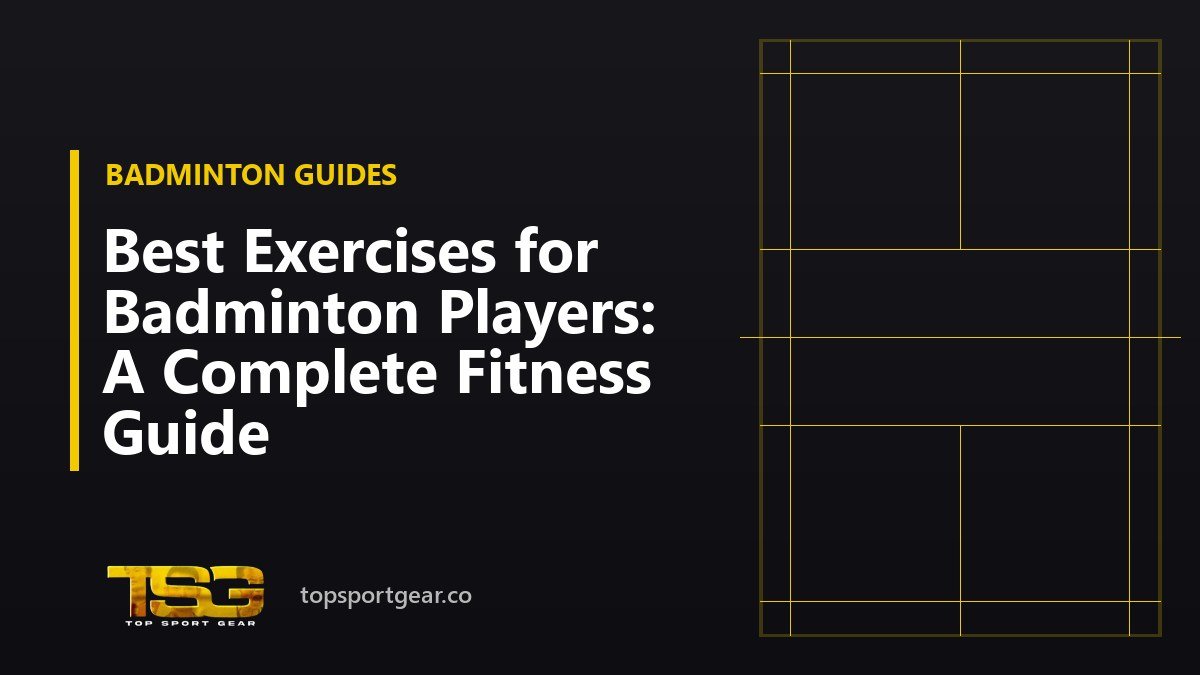
The court is 13.4 m long in both formats, but the boundaries in use change:
| Line or rule | Singles | Doubles |
|---|---|---|
| Width in play during rallies | 5.18 m (inner sidelines) | 6.10 m (outer sidelines) |
| Service court length | Short service line to the back boundary line | Short service line to the doubles long service line, 0.76 m inside the back boundary |
| Service court width | Inner sideline to centre line | Outer sideline to centre line |
| Players per side | One | Two |
| Who serves | The single player, from the right court on an even score and the left on an odd score | The serving side’s player in the correct court for their score; partners only change courts when their side wins a point while serving |
In short, the singles service box is long and narrow, while the doubles service box is short and wide. That one detail shapes how each format is served. The full measurements are explained in the guide to badminton court dimensions, and the scoring and service order are covered in badminton rules and scoring explained.
How Singles Is Played
Base Position and Court Coverage
You cover the whole court alone, so after almost every shot you recover toward a central base, usually slightly behind the middle of the court. Where exactly you stand depends on where you sent the shuttle: after a deep clear to one corner, shade slightly toward that side to cover the straight reply.
The Serve
Because the singles service box reaches the back boundary, a high, deep serve is common and safe. It pushes the receiver to the baseline and gives the server time to settle. Many players also use a low serve to stop the receiver from attacking straight away.
Typical Shot Choices
- Clears and lifts to the back corners, to make the opponent cover the full length of the court.
- Drop shots and net shots to bring them forward. The drop shot technique guide explains how to disguise it.
- Selective smashes, mainly when the lift is short or the opponent is out of position, because each smash costs energy and recovery time.
Singles Tactics
- Move the opponent to all four corners and wait for a weak reply.
- Attack the rear backhand, which is the hardest corner for most club players.
- Vary the pace: a slow drop after several fast shots can be more effective than another smash.
- Stay patient. Many singles points are lost through unforced errors rather than won with winners.
How Doubles Is Played
Formations
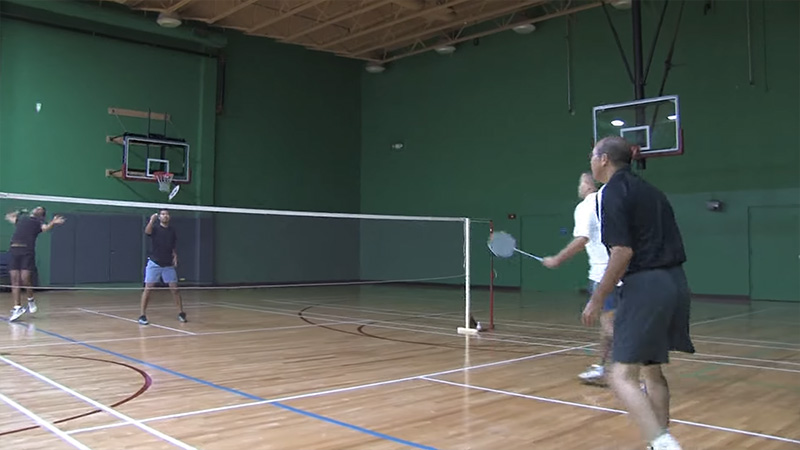
Doubles pairs switch between two basic shapes. When attacking, they play front and back: one player smashes from the rear while the partner covers the net. When defending, they play side by side, each covering one half of the court against smashes. Changing between these shapes quickly and without collisions is the core skill of doubles.
The Serve
The doubles service box is short, so a high serve can be attacked easily. The low backhand serve, landing just past the short service line, is the standard choice, with an occasional flick serve to the back to keep the receiver honest.
Typical Shot Choices
- Smashes and half smashes to the body and the middle.
- Flat drives and pushes through the mid-court.
- Tight net play and interceptions by the front player.
- Few lifts. Every lift hands the opponents the attack, so pairs try to keep the shuttle flat or down.
Doubles Tactics
- Win the attack: get the shuttle going down and keep it going down.
- Hit the middle to create hesitation between opponents.
- Defend as a pair, using blocks and drives to regain the attack. The guide to defensive techniques explains these strokes.
Physical and Mental Demands Compared
| Aspect | Singles | Doubles |
|---|---|---|
| Main physical demand | Endurance and repeated full-court movement | Reaction speed and short, explosive movements |
| Rally character | Usually longer, with more changes of pace | Usually faster, with more flat and downward shots |
| Decision making | Individual; you set your own tempo | Shared; you must read your partner as well as the opponents |
| Typical weakness exposed | Rear backhand, fitness, patience | Slow reactions, poor rotation, weak serve and return |
Neither format is easier; they test different qualities. Singles rewards fitness and shot variety, while doubles rewards hand speed and coordination.
Common Mistakes When Switching Formats
- High serving in doubles. A singles habit that gives away the first attack.
- Lifting too much in doubles. In singles a lift can be a neutral shot; in doubles it usually invites a smash.
- Smashing too often in singles. Doubles players moving to singles often tire quickly and leave the net open.
- Standing too far forward in singles. Recover to the centre, not to the doubles front-court position.
- Forgetting the lines. Use the outer sidelines in doubles and the inner sidelines in singles, and remember the shorter doubles service length.
Which Format Should You Focus On?
If you enjoy long rallies, fitness challenges and outthinking one opponent, singles suits you. If you prefer fast exchanges and playing as a team, doubles may be more enjoyable. Most club sessions are doubles-heavy because more people can play on one court, but practising both makes you a better player: singles improves movement and shot range, while doubles sharpens reactions and touch at the net. Facing a hard-hitting singles opponent also brings its own challenges, which are covered in the guide on how to play against aggressive opponents.
Frequently Asked Questions
Is the court smaller in singles?
The length is the same, but the singles court is narrower because the inner sidelines are used. For serving, the singles box is longer and the doubles box is shorter.
Why do doubles players use the backhand serve?
The short doubles service box means a high serve can be attacked. A low backhand serve is compact, easy to disguise and keeps the shuttle close to the net tape.
Can the server’s partner stand anywhere in doubles?
Yes, as long as they do not block the view of the server or receiver. Only the receiver may return the serve.
Which format is better for fitness?
Singles generally involves more continuous movement, while doubles involves more short bursts. Both are good exercise.