
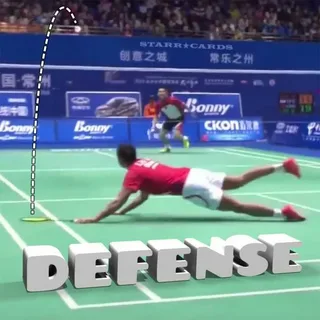
Good defence in badminton is not just survival. A well-organised defender absorbs the opponent’s attack, keeps the shuttle in play and looks for the first chance to take the attack back. This guide concentrates on the technique of defence: the ready position, the grip, the three main returns against a smash, defensive footwork and the drills that build fast hands. How to plan a whole match against a player who attacks relentlessly, including tempo, shot selection and mindset, is covered in the companion guide on how to play against aggressive opponents.
The Defensive Ready Position
Most defensive errors start before the opponent even hits. A good ready position lets you react in any direction with the smallest possible movement.
- Feet: slightly wider than shoulder width, roughly level or with the racket foot a little forward.
- Knees: bent, with the weight on the balls of the feet rather than the heels.
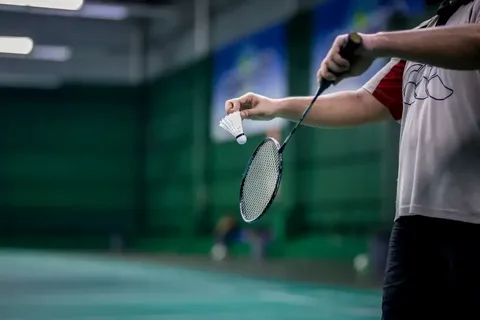
- Racket: in front of the body, around waist to chest height, with the head up and slightly toward the backhand side. Most smashes aimed at the body are easier to take on the backhand.
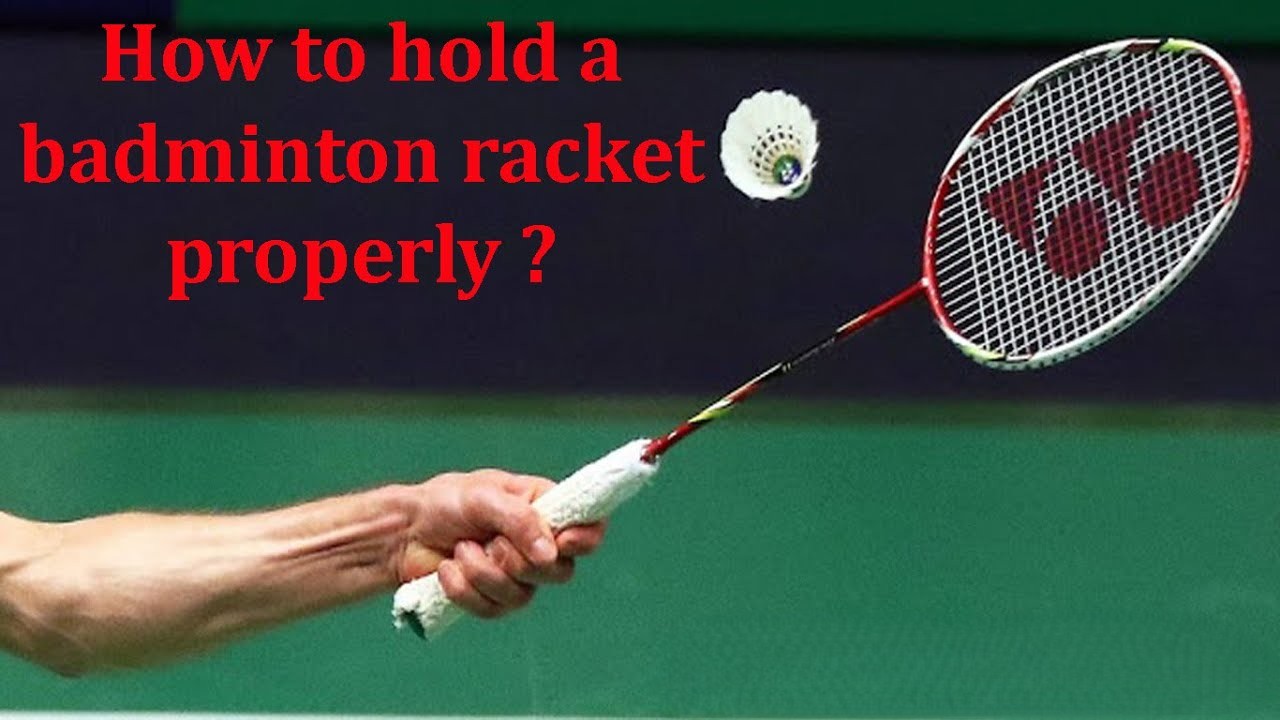
- Grip: a relaxed backhand or neutral grip, so you can take body shots and backhand-side shots without changing grip.
- Distance from the net: in singles, around the middle of the court; in doubles side-by-side defence, both players roughly level in mid-court.
Time a small split step as the opponent strikes the shuttle. Landing from it with your weight balanced lets you push off in whichever direction the shuttle goes.
The Three Main Returns Against a Smash
1. The Block
The block takes the pace off the smash and drops the shuttle just over the net. Use a short, compact action: hold the racket out in front, relax the grip at contact and let the shuttle rebound off the strings with very little swing. A block to the front court forces the smasher’s side to come forward and lift, or to play a tight net shot.
- Straight block: safest, returns along the line of the smash.
- Cross-court block: moves the shuttle away from the front player, but needs good timing.
2. The Drive (Counter-Attack)
When the smash is flat or not very steep, push the shuttle back flat and fast over the net, past the opponent’s front player. A short backswing and firm contact at the last moment turn defence into a fast exchange. This is the shot that converts defence into attack in doubles.
3. The Lift
When you are under heavy pressure, lift the shuttle high and deep to the back of the court. The goal is height and length, not speed: a high, deep lift gives you time to reset, while a short or flat lift gives the attacker an easy smash. Aim lifts at the rear corners, especially the opponent’s backhand side when you can.
| Return | Best used when | Main risk |
|---|---|---|
| Block | The smash is steep or from mid-court; the opponent’s front court is open | Too high a block can be killed at the net |
| Drive | The smash is flat or from deep in the court | Driving into a waiting front player |
| Lift | You are stretched or late | A short lift invites another, easier smash |
Reading the Attack
Anticipation gives you extra time. Watch the opponent rather than only the shuttle:
- Position under the shuttle: a player well behind the shuttle and balanced is likely to smash; one who is late is more likely to clear or drop.
- Racket preparation: a full backswing with the elbow high suggests power; a shorter swing can mean a drop or half smash.
- Habits: many players have a favourite target, such as straight smashes down the line or body smashes. Notice it early and shade your position toward it.
Avoid committing before contact, though. Good attackers use the same preparation for smash and drop, so react to the shuttle once it leaves the racket.
Defensive Footwork
- Use small adjustment steps rather than big lunges for body and mid-court shots.
- Lunge with the racket leg for wide shots to the front, keeping the knee over the ankle.
- Stay low. Standing up straight after each shot costs time on the next.
- Recover immediately after a lift so you are set before the next smash arrives.
Building Fast Hands and Reactions
Elite smashes reach very high initial speeds, but the shuttle slows quickly, and at club level you usually have a little more time than it feels. Training can make that time feel longer:
- Smash-defence feeding: a partner smashes from a raised position or mid-court while you block, drive or lift on command.
- Two-on-one defence: two attackers, one defender. Short sets of 30 to 45 seconds build speed and endurance.
- Wall drives: stand two to three metres from a wall and keep a fast flat rally going on forehand and backhand.
- Reaction drills off court: ball drops, light signals and partner pointing drills. The guide on how to improve reaction time has a full set.
Turning Defence into Attack
The best defenders are always looking for the shot that gets them out of defence:
- A tight block forces a lift, which you can then attack.
- A fast drive past the front player often draws a weak, high reply.
- A deep lift to the backhand corner can draw a short clear or a weak drop.
In doubles, once your pair regains the attack, switch from side by side to front and back. The guide to doubles positioning and communication explains how to rotate smoothly. Knowing how attackers build pressure also helps you defend, so it is worth understanding how a good smash is constructed.
Common Defensive Mistakes
- Holding the racket low or by the side.
- Gripping tightly, which makes blocks bounce up too high.
- Standing upright with straight legs.
- Guessing early and getting caught by a drop or a change of direction.
- Lifting short under pressure instead of lifting high and deep.
- Watching your own return instead of recovering.
Frequently Asked Questions
Should I defend on the forehand or backhand?
Most players defend body shots and the middle on the backhand because it covers more space in front of the body. Wide shots on the racket side are taken on the forehand.
Why do my blocks go too high?
Usually because of a tight grip or a pushing action. Relax the grip at contact and let the shuttle rebound off the strings.
Is lifting a bad shot?
No. A high, deep lift is a valid defensive reset, particularly in singles. A short or flat lift is the problem.