
Badminton is one of the fastest racket sports, and in fast exchanges you have only a fraction of a second to respond to a smash, a drive or a deceptive net shot. That is why players who seem to “react” quickly often stand out. In reality, much of what looks like fast reaction is good anticipation, efficient preparation and movement that has become automatic.
This guide explains what reaction time in badminton is made of and how to train each part, with specific drills you can use on and off court.
What Reaction Time Means in Badminton
Reaction time is the gap between something happening (your opponent hitting the shuttle) and you responding. It has three stages:
- Perception: seeing and recognising where the shuttle is going.
- Decision: choosing your response, such as a block, a lift or a counter-drive.
- Action: moving your feet and racket to execute it.
Your raw reflexes are partly fixed, but you can improve each stage: perceive earlier by reading cues, decide faster by narrowing your options, and act faster by preparing your body and racket. That is where the real gains are.
Improve Perception: See It Earlier
Read your opponent, not just the shuttle
Experienced players pick up information before the shuttle is hit: body position, racket preparation, shoulder rotation and where the contact point is relative to the body. A shuttle taken late and low behind the body cannot easily be smashed steeply; a high contact point in front of the body opens up attacking options.
Practise by watching your opponent’s preparation in every rally, and by watching match footage and pausing just before contact to predict the shot.
Keep your eyes on the action
Avoid watching your own shot after you play it. Shift your focus straight to the opponent so you are already gathering clues about the reply.
Simple vision drills
- Focus-shift drill: quickly switch your gaze between two targets at different distances to practise refocusing.
- Peripheral awareness: in doubles practice, notice your partner’s position without turning your head.
Improve Decisions: Fewer Options, Faster Choices
The more options you consider, the slower you choose. Good players simplify:
- Know the likely replies. After you lift to the rear corner, the most likely responses are a smash, a drop or a clear. Prepare for those, not everything.
- Use default responses. In defence, for example, a block to the net or a drive is often a solid default you can play without hesitation.
- Visualise patterns. Mentally rehearse common rally situations and your responses. This builds familiarity so the real situation feels less new.
Concentration also affects decision speed. Our article on how badminton improves mental health and focus looks at the mental side of staying present in rallies.
Improve Action: Be Ready to Move
Time the split step
The split step is a small hop that puts your legs in a loaded, ready position. Start it just before your opponent contacts the shuttle so that you land as they hit or just after. That way, you can push off in the right direction as soon as you see it. Splitting too early leaves you flat on the ground; too late leaves you in the air.
Hold the racket up
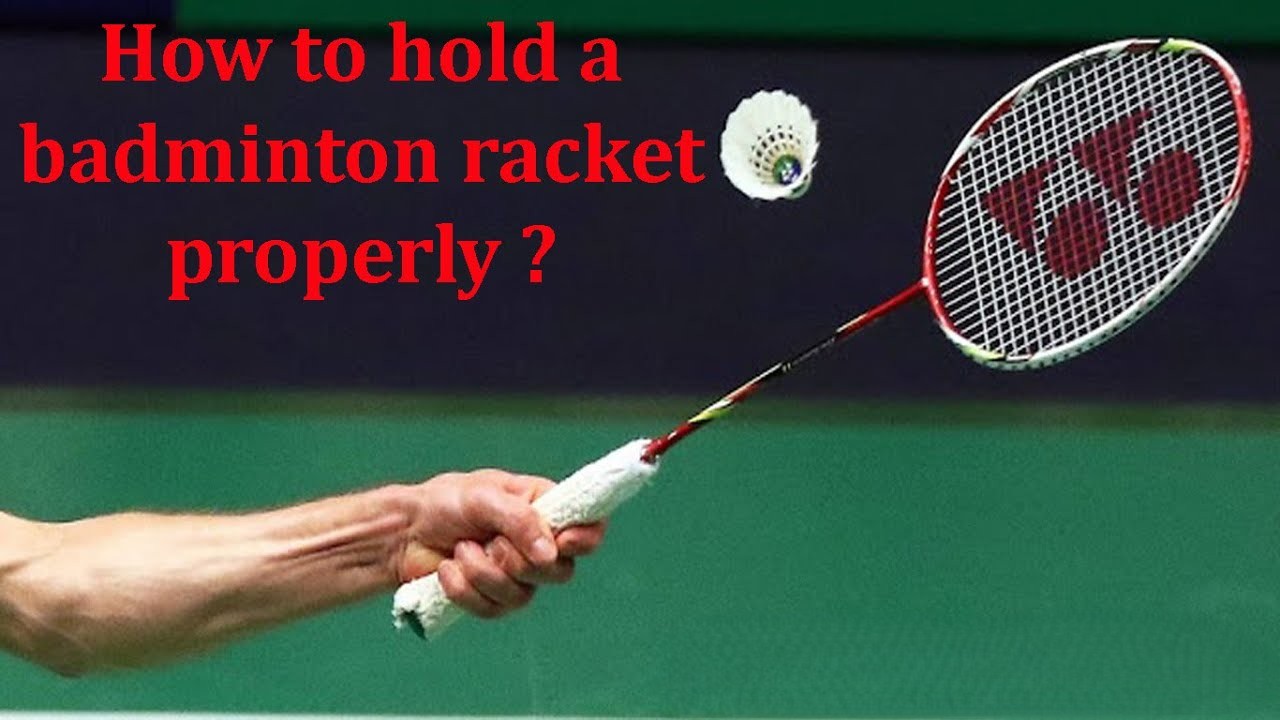
A racket held in front of the body with a relaxed grip can reach many defensive positions far quicker than one hanging by your side. In defence, a slightly shorter grip and a compact swing also help. For more on defensive positioning, see our guide to defensive techniques in badminton.
Build strength and power
Your first step depends on how quickly your legs can produce force. Squat jumps, lunges, lateral bounds and core exercises such as planks all help you launch in any direction without losing stability.
Reaction Drills to Use in Training
1. Multi-shuttle feeding
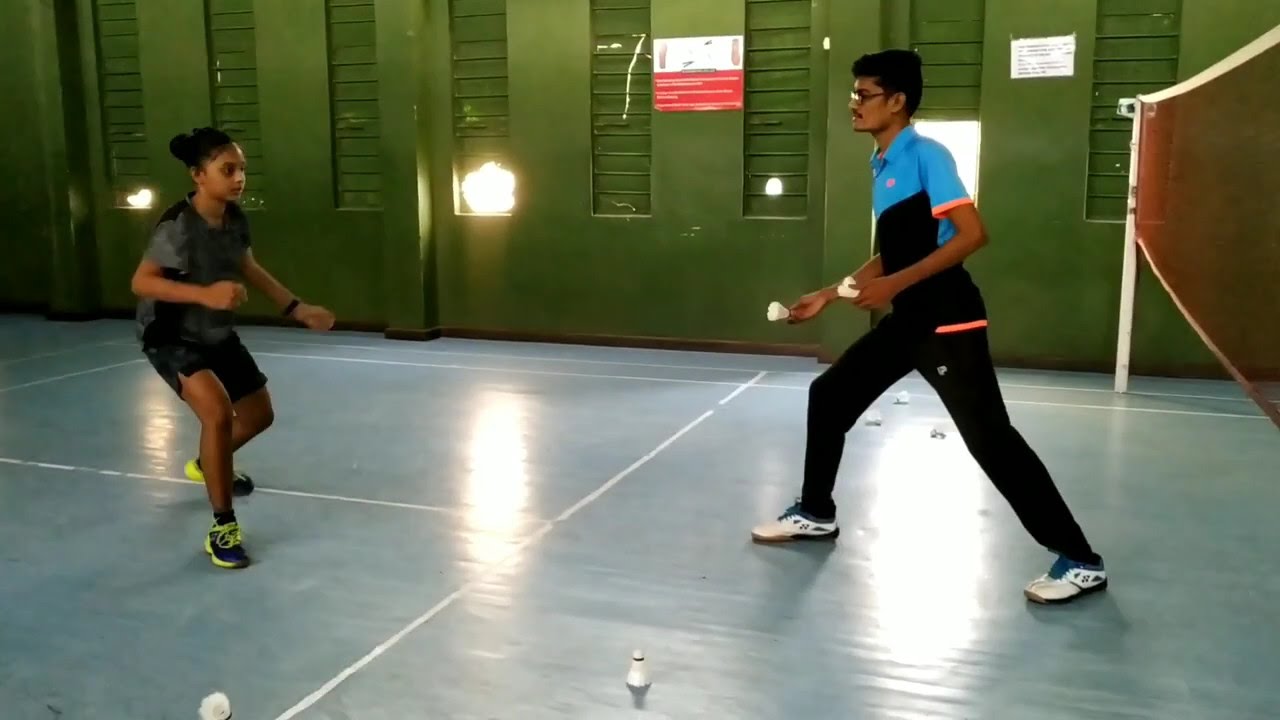
A partner feeds shuttles rapidly to random areas of the court. Start at a manageable speed with predictable feeds, then increase speed and randomness. This is one of the most effective ways to train reading, deciding and moving together.
2. Fast drive exchanges
Stand mid-court with a partner and drive the shuttle flat back and forth. Keep the racket up and the swing short. Gradually move closer together to reduce reaction time.
3. Smash defence
One player smashes from a raised or half-court position; the other defends with blocks and drives. Start with smashes at moderate pace and to one side, then mix direction.
4. Partner-called directions
Your partner points or calls a corner just as you land your split step. Move, play a shadow shot, and recover. This drill and others like it are covered in our agility drills for badminton.
5. Reaction ball
A reaction ball has an uneven surface and bounces unpredictably. Throw it against a wall or the floor and catch it after the bounce. It is a simple way to train hand-eye coordination at home.
6. Shadow badminton with cues
Shadow footwork becomes reaction training when someone else chooses the direction. Use a partner, coloured cones or a random-call app.
Prepare Your Body Before Playing
Reactions are slower when you are cold. A short dynamic warm-up with quick-feet drills, short accelerations and shadow strokes at increasing speed gets your body ready to respond from the first rally. Our badminton warm-up routine includes all of these.
Fatigue and poor sleep also slow reactions, so conditioning and recovery are part of the picture.
Frequently Asked Questions
Can you really improve reaction time?
Your basic reflexes are partly inherited, but in badminton you can respond much faster by reading cues earlier, simplifying decisions and preparing your body and racket. That is where most improvement comes from.
How often should I do reaction drills?
Short blocks of 10 to 15 minutes, two or three times a week, are effective. Do them early in a session while you are fresh.
Why am I slow to react to smashes?
Common causes are a late or missing split step, a racket held too low, and not reading the opponent’s preparation. Working on those three usually helps quickly.