
Badminton coaching has changed a great deal over the past decade or so. Coaches still rely on repetition, multi-shuttle feeding and good old-fashioned court time, but they now have far better tools for measuring performance, analysing technique and managing players’ workloads. This article looks at the main trends shaping modern badminton coaching, from elite academies to club sessions, and what they mean in practice for players and coaches.
Video and Data-Informed Coaching
The biggest shift is that coaching decisions are increasingly backed by evidence rather than impression alone. Simple tools have made this accessible far beyond the elite level:
- Video: a phone on a tripod behind the court lets coach and player review footwork, preparation and shot selection after a drill or match. Slow-motion playback makes errors such as a late racket preparation or a collapsed lunge easy to see.
- Match statistics: coaches chart where points are won and lost – unforced errors, serve-and-return outcomes, shot choices from particular areas of the court – and design drills around the patterns they find.
- Fitness testing: regular, repeatable tests (for example shuttle-run or court-movement tests, jump tests and sprint times) show whether physical training is working.
The point is not to collect numbers for their own sake. Good coaches pick a small number of measures that relate directly to a player’s goals and track them consistently.
AI and Motion-Analysis Tools
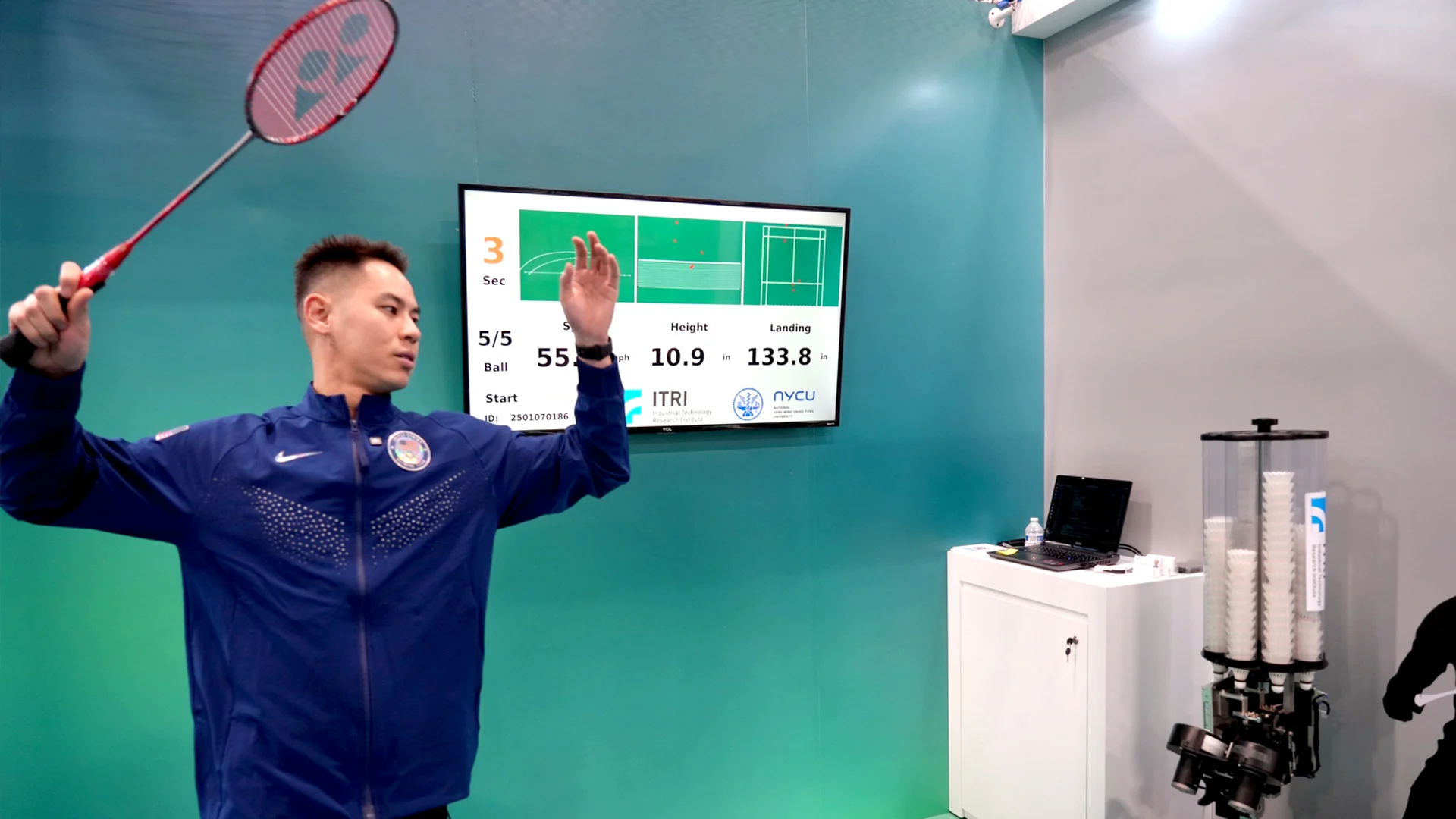
Software that uses computer vision to track players and shuttles from video has become increasingly available, including apps aimed at amateur players. These tools can estimate movement patterns, shot placement and, in some cases, stroke mechanics. Wearable sensors on the wrist or racket can count strokes and estimate swing speed.
Used well, these tools speed up feedback and help players without a full-time coach. Their limits matter too: accuracy varies, and an app cannot judge context, such as why a player chose a particular shot. Most experienced coaches treat them as a supplement to a trained eye, not a replacement. We look at the tools in more detail in our article on how AI and technology are changing badminton training.
Hybrid and Remote Coaching
Remote coaching – players sending video clips for review, followed by online feedback sessions – became much more common during the COVID-19 pandemic, when courts were closed. Our article on how COVID-19 changed the badminton world covers that period. Many coaches kept remote elements afterwards because they work well alongside in-person sessions:
- Players in areas without specialist coaches can get expert feedback.
- Players can review annotated video between sessions instead of relying on memory.
- Coaches can monitor home fitness or footwork programmes.
Remote coaching has clear limits for beginners, who need hands-on correction of grip and movement, but for intermediate and advanced players it is now a normal part of many programmes.
Mental Skills as Part of Training
Coaches increasingly treat mental skills as trainable rather than as fixed personality traits. Common elements include:
- Between-point routines to reset after errors and refocus for the next rally.
- Pressure training, such as drills that start at 18–18 or that carry a consequence for errors, so players practise decision-making when it matters.
- Goal setting focused on process (for example “split-step on every shot”) rather than only results.
- Visualisation before matches.
At elite level, sports psychologists often work with national teams; at club level, coaches can build simple routines into normal practice.
Injury Prevention and Load Management
Badminton places heavy, repeated loads on the knees, ankles, Achilles tendon, lower back and shoulder. Modern programmes put more emphasis on keeping players healthy:
- Structured warm-ups with joint mobility, activation exercises and progressive movement rather than a few static stretches.
- Strength work for the legs, hips, trunk and shoulder stabilisers, which supports both performance and resilience.
- Load monitoring: tracking training volume and how players feel (sleep, soreness, perceived effort), then adjusting intensity rather than adding more court time by default.
- Planned recovery between tournaments and heavy training blocks.
Badminton-Specific Strength and Conditioning
General gym programmes are increasingly replaced, or at least supplemented, by work that mirrors badminton movement: lunges in multiple directions, jump-and-land training, rapid change-of-direction drills, rotational core work and on-court interval sessions that copy the work-to-rest pattern of rallies. The aim is power, speed and control rather than muscle size. For practical exercises, see our guide to the best strength training exercises for badminton players.
Event-Specific Coaching
At higher levels, players usually specialise in singles or doubles, and coaching follows. Singles training emphasises court coverage, endurance, patience and rally construction. Doubles training emphasises fast exchanges, serve and return, front-court interception, rotation between attack and defence, and communication between partners. Mixed doubles has its own patterns and role divisions.
Long-Term Athlete Development
Many federations and academies now follow long-term development principles for juniors: broad movement skills and enjoyment first, sound technique before heavy competition, gradual increases in training load as young players grow, and attention to growth spurts, when injury risk rises. The goal is to develop players who are still improving and healthy in their twenties, rather than those who peak early and burn out.
What This Means for Players and Coaches
- Players: you do not need expensive technology to benefit. Filming your play, keeping a simple training log, doing a proper warm-up and some strength work, and practising under pressure will capture most of the gains.
- Coaches: modern tools work best when combined with experience. Choose a few useful measures, keep feedback simple, and use technology to support your judgement rather than replace it.
Where these trends might lead in the coming years is explored in our article on the future of badminton.
Frequently Asked Questions
Is AI going to replace badminton coaches?
Unlikely. Current tools are useful for tracking and feedback, but coaching involves judgement, motivation, tactics and communication that software does not provide.
Can amateur players use these methods?
Yes. Video review, structured warm-ups, simple strength training and pressure drills need little or no special equipment.