
Players often ask for “the best shuttlecock”, but the right shuttle depends on what the session is for. A tournament needs consistent, regulation-speed feather shuttles. A club training night needs shuttles that survive hundreds of repetitions without blowing the budget. This guide explains how to choose shuttles for training and for matches: how speed ratings work, how to test speed, which established models are used at each level, and how to make a tube last longer.
If you have not yet decided between feather and nylon, read our detailed feather vs nylon shuttlecock comparison first. This article assumes you know which type you want and focuses on picking the right grade and speed.
What Makes a Good Shuttlecock
Whatever its grade, a good shuttle does three things:
- Flies true. It turns cork-first immediately after impact and does not wobble or drift.
- Matches its speed rating. Every shuttle in the tube travels the same distance for the same stroke.
- Lasts. Feathers do not snap after a few smashes, and the cork stays firmly attached.
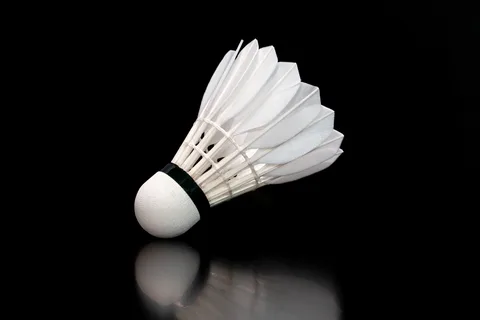
Under the Laws of Badminton published by the Badminton World Federation (BWF), a shuttle weighs between 4.74 g and 5.50 g. A feather shuttle has 16 feathers fixed in a cork base 25–28 mm in diameter, with feathers 62–70 mm long. More expensive shuttles are not heavier or bigger; they are more consistent, because their feathers are better matched.
Understanding Shuttle Speed Ratings
Air density changes with temperature, altitude and humidity. In warm air or at altitude a shuttle flies further; in cold, dense air it falls short. Manufacturers therefore make feather shuttles in different speeds so that they travel the correct distance in local conditions.
- Speeds are traditionally labelled by numbers such as 76, 77, 78 and 79, where a higher number means a faster shuttle. Some brands, including Yonex, use their own numbered speed or temperature grades instead (Yonex feather shuttles come in grades between 1 and 5 depending on the model, with a lower number for warmer conditions), printed on the tube.
- Hot halls or high altitude: choose a slower shuttle.
- Cold halls at sea level: choose a faster shuttle.
- Nylon shuttles usually indicate speed with a coloured band on the cork or tube. On the Yonex Mavis range, for example, green is slow, blue is medium and red is fast.
Speed charts vary between brands, so check the chart on the tube or the manufacturer’s site rather than assuming a “77” from one brand matches another.
How to test shuttle speed
The Laws include a simple speed test. Stand on the back boundary line and hit the shuttle with a full underhand stroke, upwards and parallel to the side lines. A shuttle of correct speed lands between 530 mm and 990 mm short of the opposite back boundary line. Clubs can do this test at the start of a session: if most shuttles land beyond the back line, switch to a slower speed; if they fall well short, use a faster one.
Shuttles for Matches and Tournaments
For competitive play the priorities are consistency and correct speed. Durability matters less, because players change shuttles whenever one is damaged or flies badly. Long-established tournament-grade feather shuttles include:
Yonex Aerosensa 50 (AS-50)
Yonex’s top feather shuttle and one of the most widely used shuttles at elite level, including many BWF events. It uses goose feathers and is known for very consistent flight. It is also one of the most expensive options, so most clubs reserve it for important matches.
Victor Master Ace
Victor’s premium feather shuttle, used in competitive play in many countries. It is a common alternative where Victor is the main supplier.
Li-Ning premium feather shuttles
Li-Ning’s tournament shuttles are used at events where Li-Ning is the official supplier. Model names and grades vary by market.
RSL tournament shuttles
RSL has made feather shuttles for decades, and its Classic Tourney is a long-standing choice for league and county-level matches in several countries.
For local tournaments, check the entry information: organisers usually specify the brand and model, and sometimes the speed.
Shuttles for Training
Training uses far more shuttles than matches. Multi-shuttle feeding drills can go through dozens of shuttles in a session, and every mishit or frame shot damages feathers. The aim is good enough flight at a sustainable cost.
Mid-grade feather shuttles
Clubs whose players compete usually train with a mid-grade feather shuttle that flies close to match quality but costs less. Examples include the Yonex Aerosensa 30 (AS-30), Victor Champion No. 1 and RSL Supreme. Their flight is close enough to tournament shuttles that players do not need to readjust on match day.
Nylon shuttles
For beginners, school sessions, fitness work and footwork drills, a quality nylon shuttle such as the Yonex Mavis 350 lasts far longer than any feather shuttle. It is one of the most widely used nylon shuttles in the world. Victor and Li-Ning also make nylon shuttles for training use.
Recycled feather shuttles
Many clubs keep shuttles that are slightly damaged after matches for multi-shuttle feeding, net practice or warm-ups. This stretches the budget without compromising match play.
Choosing a Shuttle: Quick Reference
| Situation | Recommended type | Examples |
|---|---|---|
| Tournament or important league match | Top-grade feather, correct speed | Aerosensa 50, Victor Master Ace |
| Competitive club training | Mid-grade feather | Aerosensa 30, Victor Champion No. 1, RSL Supreme |
| Beginner coaching and schools | Quality nylon | Yonex Mavis 350 |
| Footwork and fitness drills | Nylon or recycled feather | Mavis range, used match shuttles |
| Outdoor or garden play | Nylon or outdoor shuttle | See our indoor vs outdoor gear guide |
How to Make Feather Shuttles Last Longer
- Keep humidity up. Dry feathers become brittle and snap. Store tubes in a cool place away from heaters, and in dry climates some clubs place tubes in a humidifying box or lightly steam them before play. Follow the manufacturer’s advice; soaking shuttles damages them.
- Store tubes upright or flat, never crushed. Feathers bent in storage never fly straight again.
- Use the right speed. A shuttle that is too fast for the hall gets hit harder and further, and breaks sooner.
- Do not “fix” shuttles by hitting the feathers with the racket. Pick them up by hand and return them with an underarm throw or gentle hit.
- Rotate shuttles. Changing shuttles regularly in a session spreads wear across the tube.
- Retire them sensibly. Move damaged shuttles to the training box rather than binning them.
Carry tubes in a hard-sided compartment so they are not crushed in transit; our badminton bag buying guide explains what to look for. New players building a first set of equipment should also read our guide to budget badminton kits for beginners.
Frequently Asked Questions
Which shuttle speed should I buy?
Start with the speed the manufacturer recommends for your typical hall temperature, then confirm with the speed test above. Most temperate indoor halls use a middle speed.
Why do some shuttles in the same tube fly differently?
Feathers are natural, so lower-grade shuttles have more variation. Higher grades are more carefully matched, which is why they cost more.
Is a more expensive shuttle more durable?
Not necessarily. Top shuttles are chosen for consistency of flight. Durability depends more on feather quality, storage, humidity and how hard the shuttle is hit.