
Women have competed in badminton at the highest level for as long as the sport has had international championships, and some of its greatest records belong to female players. This article looks at the history of women in badminton, the players who shaped the women’s game in singles and doubles, and how the sport has moved towards equal treatment for men and women.
Women’s Badminton: A Short History
Women’s events were part of the All England Championships from the early twentieth century, and some of the first stars of the sport were women. A few landmarks:
- Judy Devlin Hashman (United States, later England) won ten All England women’s singles titles between the 1950s and 1960s, a record that still stands.
- The Uber Cup, the women’s world team championship, was first held in 1956-57. It was named after Betty Uber, a leading English player of the 1930s who promoted the idea.
- The Olympics: from badminton’s debut as a full medal sport in 1992, women competed in the same number of events as men, and mixed doubles was added in 1996.
Equal treatment off the court took longer. Prize money and media coverage for women’s events lagged behind men’s for many years. Today, prize money on the BWF World Tour is the same for men’s and women’s events: the BWF’s distribution tables give men’s and women’s singles identical shares at every tier, and the same applies to men’s and women’s doubles, and women’s singles matches are among the most watched in the sport.
Singles Champions Who Shaped the Sport
Susi Susanti (Indonesia)
Susanti won women’s singles gold at Barcelona 1992, Indonesia’s first Olympic gold in any sport. She was also world champion in 1993 and won four All England titles. Her calm, defensive style and remarkable flexibility made her one of the hardest players of her era to beat.
Zhang Ning (China)
Zhang Ning won Olympic women’s singles gold in 2004 and retained it in 2008. She remains the only women’s singles player to win two Olympic titles.
Carolina Marín (Spain)
Marín won World Championship titles in 2014, 2015 and 2018 and Olympic gold at Rio 2016, the first women’s singles Olympic champion from outside Asia. She suffered serious knee injuries more than once, including at the Paris 2024 Olympics, where she was forced to stop during her semi-final. She never played again and announced her retirement in March 2026. Her comebacks are one of the great stories of modern badminton.
PV Sindhu (India)
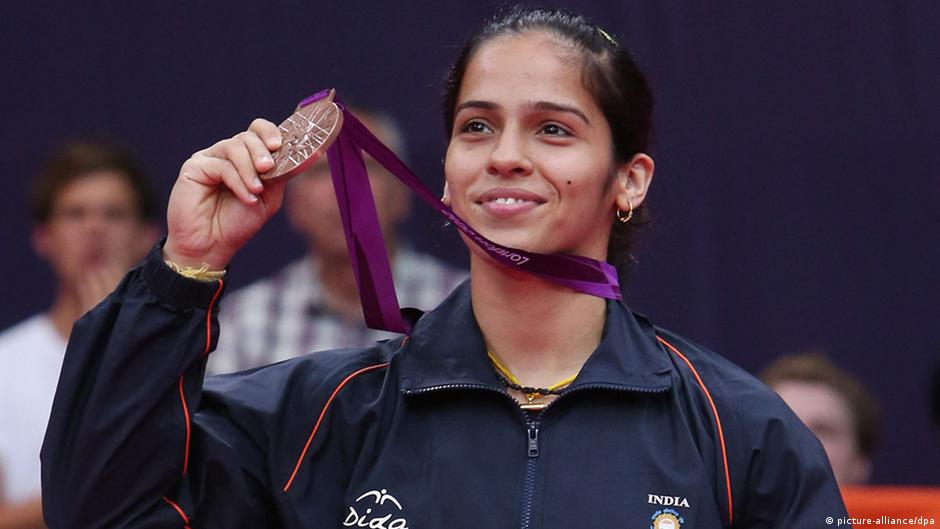
Sindhu won Olympic silver in 2016 and bronze in 2020, becoming the first Indian woman to win two individual Olympic medals, and became India’s first badminton world champion in 2019. Our PV Sindhu career profile covers her full record. She followed Saina Nehwal, whose bronze at London 2012 was India’s first Olympic badminton medal and who reached world No. 1 in 2015.
Tai Tzu Ying (Chinese Taipei)
Tai held the world No. 1 ranking for long periods and won Olympic silver at Tokyo 2020. A persistent knee injury led her to retire in November 2025. Her disguise, wrist work and shot variety made her one of the most entertaining players of any generation and influenced how coaches teach deception.
Ratchanok Intanon (Thailand)
Intanon became world champion in 2013 at just 18, the youngest women’s singles world champion in history, and was a central figure in Thailand’s rise as a badminton nation.
Akane Yamaguchi (Japan)
At around 1.56 m, Yamaguchi is one of the shortest players at the top of the women’s game. She proved height is not essential by winning back-to-back world titles in 2021 and 2022, and a third in Paris in 2025, with speed, retrieving and relentless energy. She reached the final again in 2026, losing to An Se-young.
An Se-young (South Korea)
An won the world title in 2023 and Olympic gold at Paris 2024 while still in her early twenties, combining exceptional defence with steadily improving attack. In 2025 she won 11 titles, equalling Kento Momota’s record for a single season, and in 2026 she won a second world title in New Delhi, beating Yamaguchi in the final.
Doubles Legends
Women’s doubles and mixed doubles produce some of the fastest exchanges in badminton.
- Gao Ling (China): two Olympic mixed doubles golds (2000 and 2004) and Olympic medals in women’s doubles.
- Liliyana Natsir (Indonesia): Olympic mixed doubles gold at Rio 2016 with Tontowi Ahmad and four mixed doubles world titles with two different partners: Nova Widianto (2005, 2007) and Ahmad (2013, 2017).
- Misaki Matsutomo and Ayaka Takahashi (Japan): Rio 2016 women’s doubles champions, Japan’s first Olympic badminton gold.
- Greysia Polii and Apriyani Rahayu (Indonesia): Tokyo 2020 women’s doubles champions. Polii had been disqualified at London 2012, making the win a story of redemption.
- Chen Qingchen and Jia Yifan (China): Olympic silver in Tokyo and gold in Paris, and one of the most successful pairs of their era.
Several of these players also feature in our list of the top 10 badminton players of all time.
How the Women’s Game Has Changed
- More physical: rallies are longer and faster, and women’s singles players now jump smash and dive in defence as a matter of routine.
- More tactical variety: players such as Tai Tzu Ying showed that deception can beat power, while Marín showed that aggression can beat patience.
- Wider spread of nations: champions now come from Spain, Thailand, India, Japan and South Korea as well as China and Indonesia.
- Better support: sports science, nutrition and injury management have helped players compete into their thirties.
The next generation is already coming through. See our guide to rising stars in world badminton for young players to follow.
What Aspiring Female Players Can Learn
- Play to your strengths: Yamaguchi built her game on speed, Sindhu on reach and power, Tai on deception. There is no single right body type.
- Train movement first: every champion above is an exceptional mover.
- Look after your knees: Marín’s injuries are a reminder that strength training and proper recovery matter as much as court time.
- Consider doubles: many of the sport’s most successful women made their names in doubles and mixed.
Frequently Asked Questions
Who is the most successful female badminton player?
It depends on the measure. Zhang Ning is the only two-time Olympic women’s singles champion, Judy Devlin Hashman holds the All England record, and Carolina Marín combines Olympic gold with three world titles.
When did women’s badminton join the Olympics?
At Barcelona 1992, at the same time as men’s badminton. Our guide to Olympic badminton rules, format and famous matches explains how the tournament works today.
Do women and men earn the same prize money in badminton?
On the BWF World Tour, prize money is the same for men’s and women’s events. Sponsorship income varies widely between individual players.