
Indoor badminton courts are not all the same. A sprung wooden floor, a PVC or synthetic court mat laid over concrete, and a dusty multi-purpose sports hall each grip, cushion and wear a shoe differently. This guide focuses on that indoor-court side of the decision: which established shoe lines suit which kind of player and floor, what to check on the outsole, and how to make a pair last.
If you are still working out the basics of what makes a good badminton shoe (grip, cushioning, support, weight and fit), start with our complete guide to choosing badminton shoes, then come back here to narrow down a pair.
What Indoor Courts Demand From a Shoe
Badminton movement is mostly lateral and diagonal: split step, push off, lunge, recover. On an indoor court every one of those movements is a grip-and-brake event for the outsole. Four things matter most.
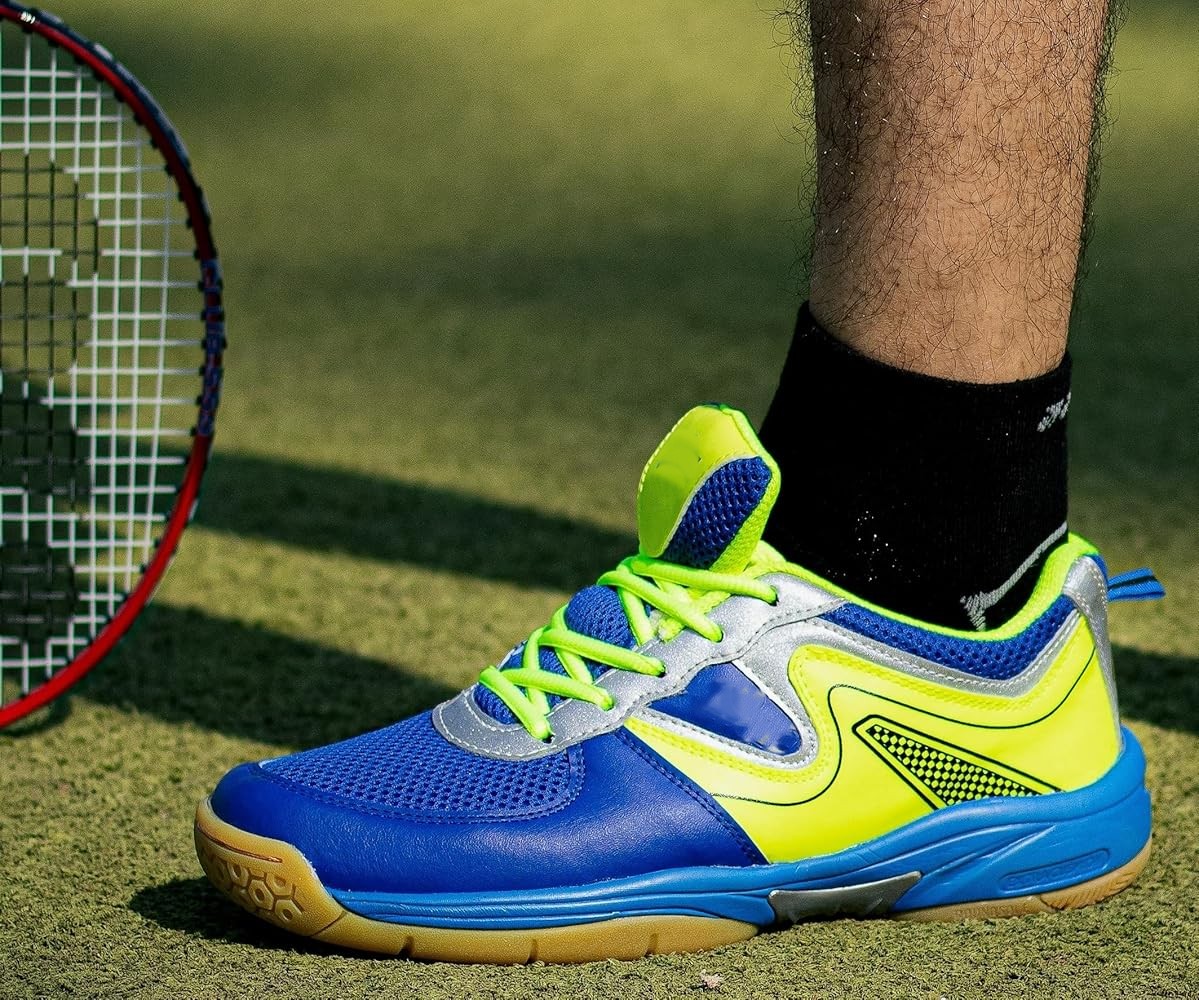
- A non-marking gum rubber outsole. Most halls insist on non-marking soles, and gum rubber grips both wood and PVC well. Running shoes and many general trainers use harder rubber that slides on smooth floors and can leave marks.
- A low, stable platform. Badminton shoes sit closer to the floor than running shoes. A lower heel reduces the leverage that rolls an ankle when you land on the outside edge of the foot.
- Forefoot cushioning, not just heel cushioning. Lunges and push-offs load the front of the foot. Look for cushioning that extends under the ball of the foot as well as the heel.
- Lateral containment. The upper should hold the foot over the sole during sideways stops. If your foot slides over the edge of the midsole, the shoe is too soft or too wide for you.
Wooden Floors vs PVC Court Mats
Sprung wooden floors
Wooden floors give a little underfoot, so they are kinder to knees. Their weak point is dust: a lightly dusty wooden floor becomes slippery quickly. Shoes with a fine, multi-directional tread pattern and soft gum rubber tend to grip best. Wipe the soles on a damp towel between games if the hall is dusty.
PVC and synthetic court mats
Major international events and many dedicated badminton centres use PVC court mats. They usually grip very well, sometimes so well that a sticky sole can catch during a rotation. On these surfaces a sole with a clear pivot point under the ball of the foot helps. Because the mat is often laid over concrete, cushioning matters more than on wood.
Multi-purpose sports halls
School gyms and leisure centres often have painted floors marked for several sports, and grip can vary from one end of the court to the other. A good all-round shoe with dependable gum rubber is the safest choice here, rather than a specialist ultra-light model.
Established Indoor Shoe Lines by Player Type
Brands refresh their models every year or two, usually adding a new generation number (Z2, Z3 and so on) to an existing line. Rather than chase this season’s version, it is more useful to know what each long-running line is designed for. The descriptions below are based on how the brands position these lines and on common player feedback; always check the current generation’s specifications and, ideally, try a pair on.
All-round cushioning and comfort
- Yonex Power Cushion 65 Z series. One of the most widely used badminton shoes at club level. It uses Yonex’s Power Cushion technology and is designed as a balanced all-rounder: decent cushioning, stable fit and good durability. A sensible default if you are unsure what you need.
- Victor P9200 series. Victor’s cushioning-focused line, aimed at players who want more protection on hard floors or who play long sessions.
Stability for heavy footwork
- Yonex Eclipsion series. Built around lateral stability, with a more supportive upper. Suits singles players and anyone who lands hard after jump smashes.
- Victor A970 series. A popular Victor line known for a supportive, locked-in feel and a stable heel.
- Mizuno Wave Fang series. Mizuno’s main badminton line. Mizuno positions recent models such as the Wave Fang 3 around stability for lunging, with a flat sole and a forefoot outrigger.
Lightweight speed
- Yonex Aerus series. Yonex’s lightweight line; retailers list the Aerus Z2 at roughly 240 g, which Yonex markets as its lightest badminton shoe. It feels fast and flexible, which doubles players at the front court often like, but it offers less cushioning and support than heavier models.
Budget and multi-court use
- Asics Gel-Rocket series. An affordable indoor court shoe used for badminton, volleyball and squash, with GEL cushioning and a non-marking outsole with an outrigger for side-to-side support. It is less specialised than a dedicated badminton shoe, but a big improvement over running shoes for recreational players.
- Asics Gel-Blade / Blade FF. A more performance-oriented Asics indoor shoe aimed at fast court sports.
Li-Ning also makes a wide range of badminton shoes with its own cushioning systems, but model names and availability vary a lot by country, so check what is sold locally.
Women players should note that many of these lines are unisex or sized in men’s lengths. Our guide to badminton shoes for women covers fit, sizing conversions and women’s-specific models.
Quick Matching Guide
| If you… | Prioritise | Lines to try on |
|---|---|---|
| Play two or three club sessions a week | Balanced cushioning and durability | Power Cushion 65 Z, Victor P9200 |
| Play singles or land hard on smashes | Lateral stability, heel lock | Eclipsion, Victor A970, Mizuno Wave Fang |
| Play fast doubles at the front court | Low weight, flexibility | Yonex Aerus |
| Play once a week on a budget | Gum outsole, basic cushioning | Asics Gel-Rocket |
| Get knee or heel pain on hard halls | Maximum cushioning | Cushion-focused models, plus a cushioned sock |
How to Test a Shoe on an Indoor Court
- Wear your match socks. A thick cushioned sock can change the fit by half a size. Our guide to badminton socks and grip enhancers explains what to look for.
- Do a split step and two lunges. Your heel should not lift and your toes should not hit the front of the shoe on the lunge.
- Push off sideways. Your foot should stay over the sole, not roll over the outside edge.
- Check the toe drag area. Players who drag the back foot during lunges wear through the inside of the toe quickly. Some models have a reinforced toe for this.
Shoes cannot replace good movement. If you are slipping or losing balance in lunges, our beginner footwork drills will help as much as new footwear.
Making Indoor Shoes Last
- Keep them indoor-only. Walking on pavement picks up grit and wears gum rubber quickly, so change shoes at the court. If you also play outside, read our comparison of indoor and outdoor badminton gear.
- Wipe the soles. A damp cloth restores grip on dusty floors and removes the film that builds up on the rubber.
- Dry them properly. Remove the insoles and let the shoes air-dry away from direct heat. Radiators and hot car interiors can weaken the glue between sole and upper.
- Know when to replace them. Smooth patches under the forefoot, a deeply creased midsole, or new aches in the knees or shins after play are all signs that the shoe has worn out, even if the upper still looks fine.
Frequently Asked Questions
Can I use volleyball or squash shoes for badminton?
Yes, for recreational play. Indoor court shoes for these sports share the key features: gum rubber, a low profile and lateral support. Dedicated badminton shoes are usually lighter and lower to the floor.
Are more expensive badminton shoes always better?
No. Higher-priced models typically add newer cushioning materials or lighter uppers. Fit matters more than price: a mid-range shoe that fits well is better than a flagship model that lets your heel lift.
How often should club players replace their shoes?
It depends on how often and how hard you play. Players training several times a week can wear through a pair within a year; occasional players get much longer. Judge by the sole and by how your joints feel, not by the calendar.