
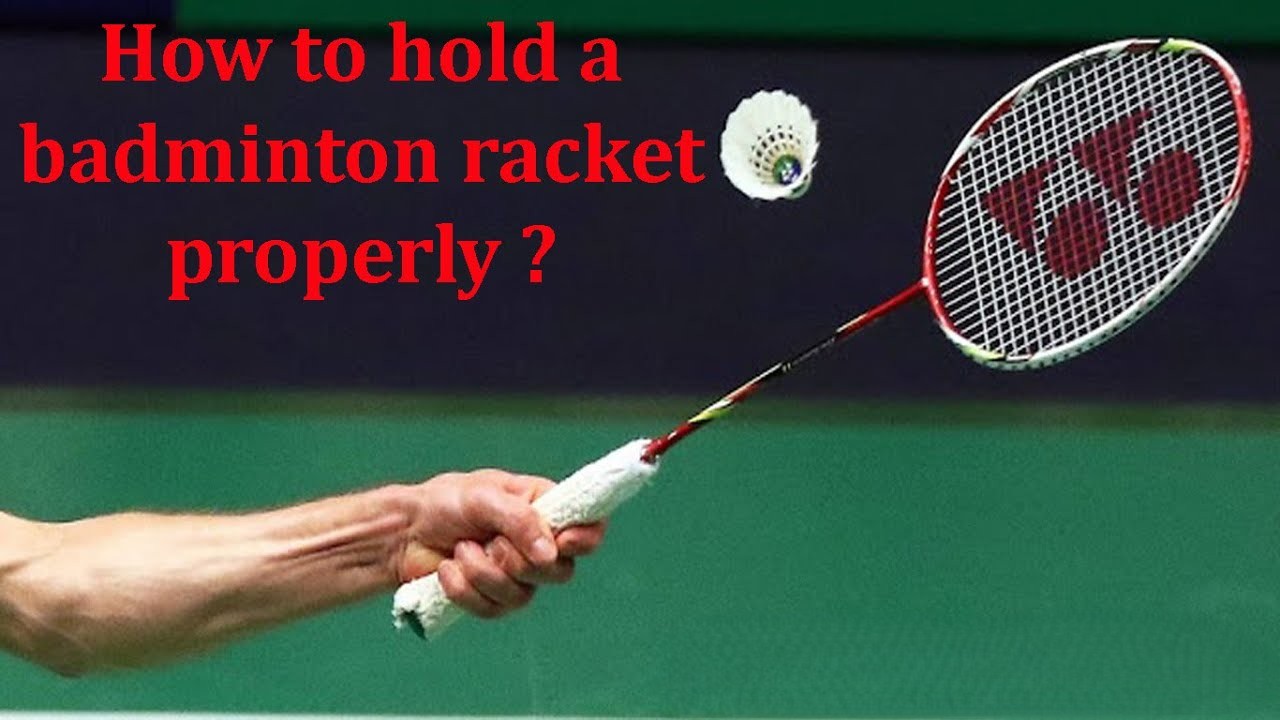
If you are new to badminton, the first skill to get right is how you hold the racket. A correct grip lets you control the racket face, generate power through a relaxed swing, and switch quickly between forehand and backhand shots. A poor grip, usually holding the racket like a frying pan or squeezing it too hard, limits every shot you play and is hard to unlearn later.
This guide covers the two fundamental grips every beginner needs, how to switch between them, how tight to hold the racket, common mistakes and simple drills. Once these feel natural, our article on badminton grip types explains the more specialised variations, such as the bevel and panhandle grips.
Why a Proper Racket Grip Matters
Your grip is the foundation of your strokes. With the right technique you can:
- Play more accurate shots, because the racket face points where you intend.
- Generate more power in smashes and clears through forearm rotation rather than arm strength.
- Switch quickly between forehand and backhand grips during fast rallies.
- Reduce strain on the wrist, elbow and shoulder.
Many beginners overlook the grip and struggle later, so it is worth spending time on it from the very first session.
The Forehand Grip (Handshake Grip)
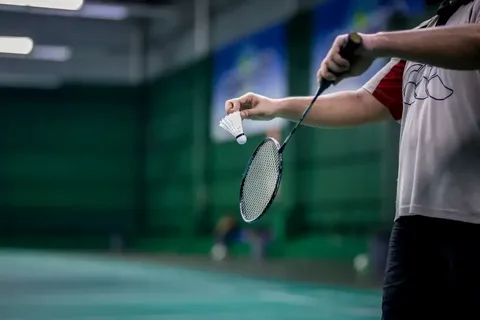
The forehand grip is the most common and versatile way to hold a badminton racket. It feels like shaking hands with the handle.
How to hold the forehand grip
- Hold the racket by the shaft with your non-playing hand so the racket face is vertical, edge-on to the floor.
- Place your playing hand on the handle as if shaking hands with it.
- Let your thumb and index finger form a “V” shape that sits on the thin, top bevel of the handle.
- Wrap your fingers around the handle with a small gap between the index and middle finger. The index finger should be slightly spread along the handle, like a trigger finger.
- Hold the racket low in the hand, near the end of the handle, so the butt of the handle sits against the heel of your palm.
- Keep the grip relaxed. You should be able to wiggle the racket slightly in your hand.
Used for: forehand clears, smashes, drops, drives and forehand net shots.
The Backhand Grip (Thumb Grip)
When the shuttle comes to your non-racket side, you need the backhand grip.
How to hold the backhand grip
- Start from the forehand grip.
- Rotate the racket slightly anticlockwise in your fingers (clockwise for left-handers).
- Place the pad of your thumb flat against the wide back bevel of the handle.
- Bring the handle slightly away from the palm so your fingers, not your palm, control it.
- Use your thumb to push through the shot as you swing.
Used for: backhand drives, blocks, net shots, defensive returns and backhand clears. For backhand shots from the rear court, players often adjust the thumb position slightly, which is covered in our guide to grip types.
How Tight Should You Hold the Racket?
A useful rule is to hold the racket loosely while waiting and between shots, and tighten your fingers only at the moment of contact. Coaches sometimes describe it on a scale of one to ten: around three or four when ready, briefly firmer on impact, then relaxed again.
This tighten-and-release action is what produces a sharp, fast shot. A constantly tight grip slows the racket head down, tires the forearm and makes it harder to change grips.
Switching Between Forehand and Backhand
In a real rally you will change grips many times. The change should be a small rotation of the handle with your fingers, not a full regrip with the whole hand.
- Return to a neutral, relaxed grip after each shot.
- Use your fingers to rotate the handle; your palm should stay loose.
- Practise the change until it happens automatically as you move towards the shuttle.
Common Mistakes Beginners Make
- The “frying pan” grip: holding the racket with the face parallel to the floor. It feels natural at first but makes overhead shots weak and backhands almost impossible.
- Squeezing too hard: this slows the wrist and forearm and makes your shots stiff.
- Fist grip: wrapping all fingers tightly together with no gap. It removes finger control and feel.
- Holding too high on the handle: choking up near the shaft reduces leverage on clears and smashes. Holding slightly higher is fine for fast exchanges at the net, but return to a low hold for overhead shots.
- Forgetting to change grips: trying to play backhands with a forehand grip leads to weak, wristy shots.
Practice Drills to Build a Good Grip
- Grip-change drill: hold the racket in front of you and alternate between forehand and backhand grips 20 times, slowly at first and then faster. Check the “V” and the thumb position each time.
- Shadow swings: without a shuttle, practise forehand clears and backhand drives, focusing on a relaxed grip that tightens only at the imaginary contact point.
- Shuttle bouncing: bounce a shuttle on the racket face, alternating forehand and backhand sides. This builds finger control and quick grip changes.
- Wall rallies: hit against a wall from a short distance, alternating forehand and backhand drives.
- Watch slow motion: watch slow-motion footage of experienced players and notice how loose their hands are between shots.
Does Grip Size Affect Your Grip?
Yes. A handle that is too thick makes finger control and grip changes harder; one that is too thin can make you squeeze. Most players adjust thickness with an overgrip. If you are buying a racket, our guide to choosing your first badminton racket explains how to check grip size, and parents can find sizing advice in our guide to rackets for kids and teens.
Frequently Asked Questions
Is the badminton grip the same as a tennis grip?
No. Badminton relies far more on finger control and forearm rotation, and the racket is much lighter, so the grip is looser and changes more often.
How long does it take to learn the correct grip?
Most beginners can hold the basic grips correctly within a few sessions, but making grip changes automatic during rallies takes several weeks of regular practice.
Should left-handed players do anything differently?
The grips are the same, mirrored. Rotate the racket in the opposite direction when switching to the backhand grip.