
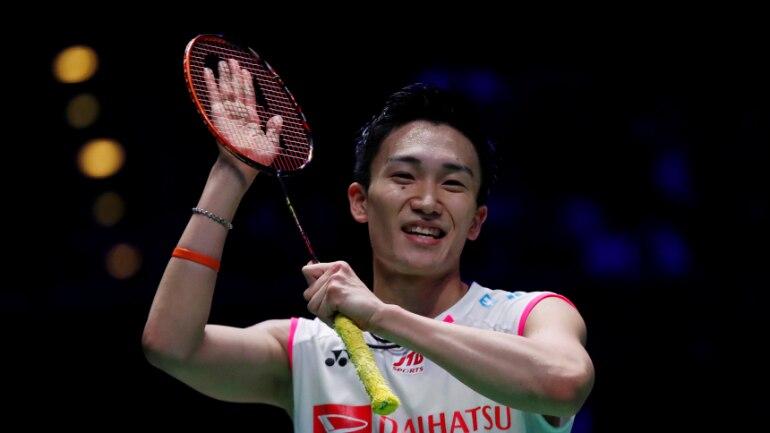
Few careers in badminton have had higher highs and harder lows than Kento Momota’s. He became Japan’s first men’s singles world champion, dominated the 2019 season like almost no player before him, and then had his career knocked off course by a suspension, a serious car crash and a long struggle to recover his form. This Kento Momota biography follows each stage and explains what made his style so effective.
Early Life and Junior Career
Momota was born on 1 September 1994 in Kagawa Prefecture, on the Japanese island of Shikoku. He started playing as a young child and later moved to a specialist badminton school, a common path for talented Japanese juniors.
His first major international result came at the 2012 World Junior Championships, where he won the boys’ singles title, the first Japanese man to do so. Even as a junior he was known for tidy footwork, soft hands at the net and unusual patience in rallies.
Breakthrough at Senior Level
- 2014 Thomas Cup: Momota was part of the Japan team that won the men’s world team title for the first time, beating Malaysia in the final.
- 2015: he won his first Superseries title at the Singapore Open, took bronze at the World Championships and finished the year by winning the Superseries Finals in Dubai.
By early 2016 he was among the favourites for an Olympic medal in Rio.
Suspension and Return
In April 2016 the Nippon Badminton Association suspended Momota after he admitted visiting an illegal casino in Japan. He was withdrawn from the Rio Olympics and missed international competition for more than a year.
He returned to tournaments in 2017, initially at lower-level events because his ranking had dropped. He rebuilt it quickly, and the time away seemed to sharpen his focus and fitness.
World Champion: 2018 and 2019
Momota won the 2018 World Championships in Nanjing, becoming the first Japanese man to win a world singles title. In 2019 he defended it in Basel, beating Denmark’s Anders Antonsen in a one-sided final.
The 2018 win completed a remarkable turnaround: little more than a year after his suspension ended in 2017, he had climbed from the lower reaches of the rankings to world champion, and in September 2018 he became the first Japanese men’s singles player to reach world No. 1.
The Record-Breaking 2019 Season
In 2019 Momota won 11 titles, a record for a single season in men’s singles recognised by Guinness World Records. They included the All England Open, his home Japan Open, the World Championships and the season-ending BWF World Tour Finals. He finished the year as world No. 1 by a wide margin and was named BWF Male Player of the Year.
What made 2019 remarkable was not just the number of titles but the manner of the wins. He rarely looked rushed, lost few long matches and seemed to have an answer for every style he faced.
The 2020 Car Accident and Its Aftermath
In January 2020, hours after winning the Malaysia Masters, Momota was travelling to Kuala Lumpur airport when his car was involved in a crash. The driver died. Momota suffered facial injuries, including a fractured eye socket, and later needed surgery after experiencing double vision.
The pandemic then paused the tour for most of 2020, and the Tokyo Olympics were moved to 2021. Momota returned to competition and won titles again, but he went out in the group stage at his home Olympics, and his results gradually declined from 2022 onwards. Many observers believe the accident affected his vision and confidence more than was visible from the outside. In April 2024, after missing out on Paris 2024, he announced his retirement from international badminton: the 2024 Thomas Cup in Chengdu was his last event for the Japanese national team, and since then he has played only domestic competitions in Japan.
Playing Style: Why He Was So Hard to Beat
Momota was a left-hander with a counter-attacking, control-based game rather than a pure power player.
- Net play: his tight spinning net shots forced opponents to lift, giving him control of the rally.
- Defence: he read smashes early and blocked them to the forecourt with little backswing.
- Shot tolerance: he was comfortable in rallies of 40 or 50 shots and rarely made unforced errors.
- Movement: efficient, quiet footwork meant he wasted very little energy.
Lessons for club players
- Practise net shots until you can keep them tight under pressure. They set up the rest of the rally.
- Learn to defend with a short, blocking action instead of a full swing.
- Be patient: winning the rally by forcing a weak lift is often better than smashing early.
Legacy
Momota showed that a Japanese men’s singles player could dominate the world, and his success came during a period when Japan became one of the strongest badminton nations across all five events. Players such as Kodai Naraoka, profiled in our look at rising stars in world badminton, came through in the years that followed.
He sits just outside our top 10 badminton players of all time as an honourable mention, mainly because his peak was shorter than the legends ahead of him. Several of his best matches also feature in our list of the most memorable matches in badminton history.
Frequently Asked Questions
How many times was Kento Momota world champion?
Twice: in 2018 (Nanjing) and 2019 (Basel).
Did Kento Momota win an Olympic medal?
No. He missed Rio 2016 because of his suspension and was knocked out in the group stage at Tokyo 2020.
How many titles did Momota win in 2019?
Eleven, a record for a men’s singles player in one season. To understand how those tournaments fit together, see our explainer on how the BWF World Tour works.