
Badminton may have humble backyard roots, but on the Olympic stage it is a showcase of lightning speed, precision, and strategy. Since its debut, Olympic badminton has thrilled millions of fans and inspired players around the world. Here’s everything you need to know—from how the sport became an Olympic event to the rules and unforgettable matches that defined its legacy.
A Brief History of Olympic Badminton
-
Early Beginnings
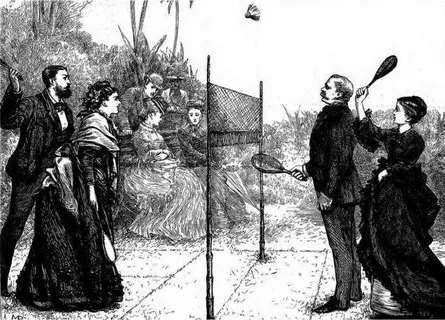
Badminton originated in British India during the mid-19th century, evolving from a game called Poona. It spread quickly to England and then across Europe and Asia. -
Olympic Introduction
Badminton first appeared as a demonstration sport in the 1972 Munich Games, but it wasn’t until Barcelona 1992 that it became an official Olympic medal event.-
Initial events included men’s singles, women’s singles, men’s doubles, and women’s doubles.
-
Mixed doubles were added at the 1996 Atlanta Games, completing today’s Olympic lineup.
-
-
Dominant Nations
Asian countries—particularly China, Indonesia, South Korea, and Malaysia—have consistently dominated the podium, although nations like Denmark have produced legendary European champions.
Core Rules of Olympic Badminton
Olympic badminton follows the standard BWF (Badminton World Federation) regulations:
-
Scoring System
-
Best of three games, each to 21 points.
-
A player or pair must win by two points, with a cap at 30.
-
-
Service Rules
-
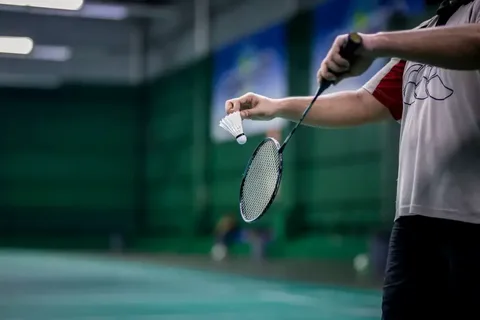
Serve must be delivered below the server’s waist.
-
In doubles, servers must stand within their designated service court and follow the rotating service order.
-
-
Court Dimensions
-
Singles: 13.4 m x 5.18 m
-
Doubles: 13.4 m x 6.1 m
The net is set at 1.55 m high.
-
-
Let & Faults
-
A rally is replayed on a let (e.g., shuttle hits the net and lands in).
-
Faults include striking the shuttle twice or touching the net with a racket or body.
-
These rules create fast-paced rallies where reflexes and stamina are crucial.
Famous Olympic Badminton Matches
The Olympics have delivered countless thrilling moments that still spark conversation among fans:
-
1992 Barcelona – Men’s Singles
Alan Budikusuma (Indonesia) captured the inaugural men’s singles gold, cementing Indonesia’s status as a badminton powerhouse. -
2008 Beijing – Lin Dan’s Perfect Run
Chinese legend Lin Dan dominated every opponent without losing a single game, defeating Lee Chong Wei to win gold. His speed and aggression remain a benchmark. -
2012 London – Women’s Singles Epic
Li Xuerui (China) vs. Wang Yihan (China) was a tactical masterclass, highlighting the rise of new Chinese talent. -
2016 Rio – Carolina Marin Makes History
Carolina Marin (Spain) became the first European woman to win singles gold, breaking Asia’s long-standing dominance. -
2020 Tokyo – Men’s Singles Triumph
Viktor Axelsen (Denmark) claimed the title, showcasing Europe’s growing competitiveness at the highest level.
These matches underscore badminton’s global appeal and the drama only the Olympics can bring.
Training & Strategy Behind Olympic Success
Olympic badminton demands explosive speed, endurance, and mental focus. Top athletes follow year-round training routines that include:
-
Footwork Drills for rapid court coverage
-
Strength & Conditioning to endure long rallies
-
Video Analysis to dissect opponents’ tactics
Strategically, players must master:
-
Deceptive Shots such as disguised drops and cross-court smashes
-
Net Dominance to control the tempo
-
Stamina Management to outlast rivals during three-game battles
The Global Impact of Olympic Badminton
Since its inclusion in 1992, Olympic badminton has accelerated the sport’s worldwide popularity. Grassroots programs in Africa, Europe, and the Americas owe much to the Olympic spotlight. National federations invest heavily in youth training after every Games, broadening badminton’s reach beyond traditional Asian powerhouses.
Looking Ahead: Future of Olympic Badminton
With technology influencing racket design and training methods, the sport is evolving faster than ever. Hawk-Eye line review and real-time match analytics already play key roles. As Paris 2024 showcased new talent and record-breaking rallies, expectations for the Los Angeles 2028 Olympics are soaring, promising even higher levels of athleticism and global competition.
Why Olympic Badminton Continues to Inspire
From its historic debut to present-day global spectacle, Olympic badminton blends artistry, endurance, and international spirit. Its thrilling rallies and unforgettable champions ensure that every four years, the shuttle once again captures the world’s imagination.