
You’ve decided to take badminton seriously. Maybe you’ve been borrowing your friend’s racket, or perhaps you’ve been using that old one from your garage. Either way, you’re ready to buy your first proper badminton racket – and honestly? That’s exciting!
But here’s the thing: walk into any sports store or browse Amazon, and you’ll be hit with hundreds of options. Yonex, Li-Ning, Victor. Carbon fiber, aluminum, graphite. Head-heavy, head-light, even balance. It’s overwhelming.
I’ve been there. I remember standing in a sports shop seven years ago, staring at a wall of rackets, completely confused. The salesperson kept throwing technical terms at me, and I just nodded along, pretending to understand.
That’s why I wrote this guide – to save you from that confusion and help you make a smart, confident choice.
Why Your First Racket Choice Actually Matters
Let me be straight with you: your first racket won’t make you a professional player overnight. But choosing the wrong one? That can absolutely slow down your progress and even lead to injuries.
Here’s what happens when beginners pick the wrong racket:
- Too heavy? Your arm gets tired quickly, your technique suffers, and you risk tennis elbow
- Wrong balance? You develop bad habits that are hard to fix later
- Too expensive? You waste money on features you don’t need yet
- Too cheap? The racket breaks after a few weeks, and you’re back to square one
The good news? Finding the right racket for beginners isn’t complicated when you know what to look for.
The 5 Key Factors to Consider (And What They Actually Mean)
1. Racket Weight: Start Light, Play Tight
What you need to know: Badminton rackets typically weigh between 75-95 grams (without strings).
For beginners, I always recommend starting with a lighter racket (75-85 grams).
Why?
- Faster swing speed = better shuttle control
- Less arm fatigue during long games
- Easier to develop proper technique
- Lower injury risk
My recommendation: Look for rackets labeled as 2U (90-94g) or 3U (85-89g). If you see “4U (80-84g)” or “5U (75-79g)”, even better for beginners!
Real talk: I started with an 88-gram racket, and it was perfect. My friend started with a 95-gram “power racket” because it looked cool, and he developed elbow pain within two months. Don’t be that person.
2. Balance Point: Find Your Sweet Spot
This is where most beginners get confused, but it’s actually simple.
Three types of balance:
Head-Heavy Rackets
- More weight towards the head
- Best for: Aggressive players who love smashing
- Not ideal for beginners (requires more arm strength and control)
Head-Light Rackets
- More weight towards the handle
- Best for: Defensive players, quick net play, doubles
- Good for beginners who want speed and control
Even Balance Rackets
- Weight distributed evenly
- Best for: ALL-AROUND play
- PERFECT FOR BEGINNERS
My recommendation for your first racket: Go with an even balance racket. It gives you the flexibility to try different playing styles without committing to one specific approach.
You can always buy a specialized racket later when you figure out your playing style. For now, versatility is your friend.
3. Shaft Flexibility: How Stiff Should It Be?
The shaft is the thin part connecting the handle to the head. It comes in three flexibility levels:
Flexible Shaft
- Easier to generate power with less effort
- More forgiving on technique
- Perfect for beginners
- Great for defensive shots and clears
Medium Flexibility
- Balanced between power and control
- Also good for beginners moving to intermediate
Stiff Shaft
- Requires perfect technique to generate power
- Used by advanced players
- NOT recommended for beginners
Why this matters: A flexible shaft acts like a whip – it stores energy during your swing and releases it at impact. This means you can hit powerful shots even without perfect technique.
My experience: When I switched from a stiff shaft to a flexible one (before I knew better), my clear shots improved by at least 20%. The racket was doing some of the work for me.
4. Grip Size: The Forgotten Factor
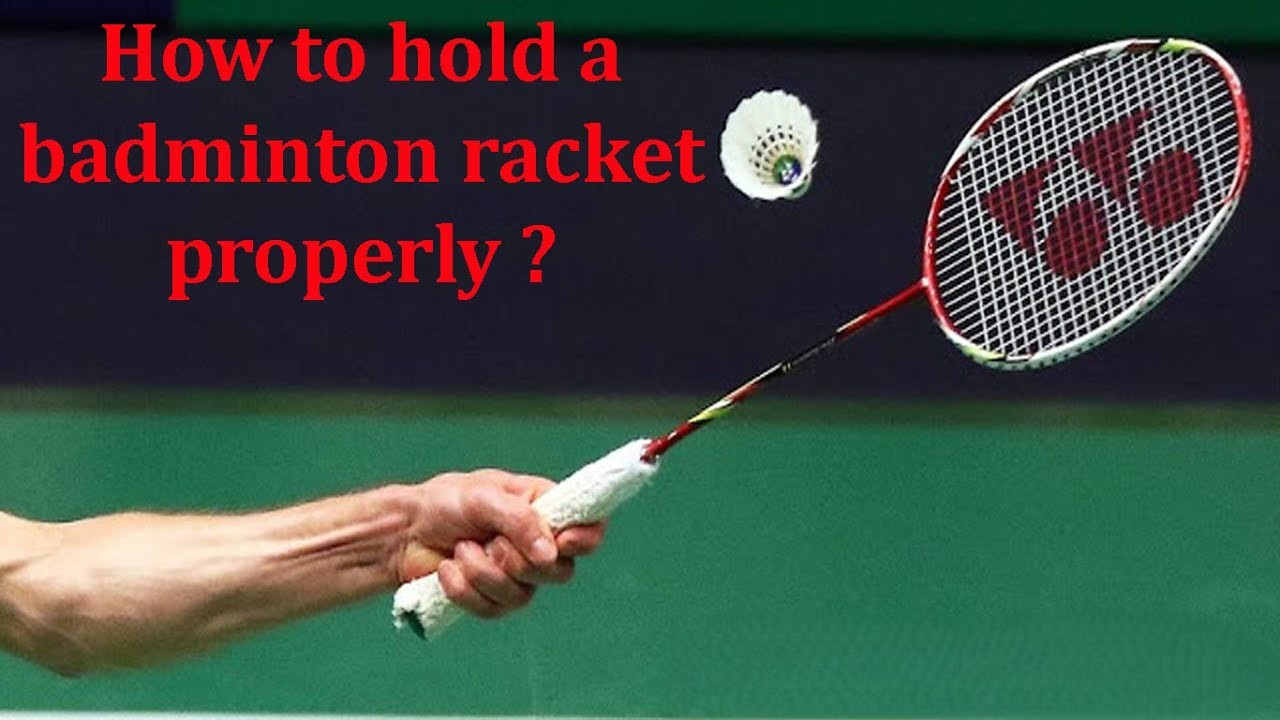
Most beginners completely ignore grip size. Don’t make that mistake.
How to check if a grip fits:
- Hold the racket in your playing hand
- Look at the gap between your fingertips and palm
- You should be able to fit your opposite index finger in that gap
If the gap is:
- Too small: Grip is too thick (causes wrist strain)
- Too large: Grip is too thin (reduces control)
- Just right: You can fit one finger comfortably
Pro tip: It’s easier to make a grip thicker (by adding overgrip tape) than to make it thinner. So when in doubt, go slightly smaller.
Standard grip sizes:
- G4 (most common): 3.25 inches – fits most adults
- G5: 3.125 inches – smaller hands, women, youth
- G6: 3 inches – kids
5. Material: What’s Your Racket Made Of?
Aluminum/Steel Rackets
- Price: $15-$40
- Pros: Cheap, durable, good for casual backyard play
- Cons: Heavy, less control, not suitable for serious play
- Best for: Absolute beginners or recreational players
Graphite/Carbon Fiber Rackets
- Price: $30-$200+
- Pros: Lightweight, better control, professional-grade performance
- Cons: More expensive, less durable if mishandled
- Best for: Serious beginners and beyond
My honest recommendation: If you’re serious about learning badminton (which you probably are since you’re reading this), invest in a carbon fiber/graphite racket. You don’t need the $200 pro model, but a decent $40-$70 carbon fiber racket will serve you much better than any aluminum racket.
Think of it this way: would you rather spend $30 on an aluminum racket that holds you back, or $60 on a proper racket that helps you improve?
Budget Guide: How Much Should You Spend?
Let’s talk money. Here’s what you can expect at different price points:
Under $30: Casual Play Only
- Mostly aluminum or low-quality graphite
- Fine for backyard games
- Not recommended if you want to improve
$40-$70: Sweet Spot for Beginners
- Good quality carbon fiber/graphite
- Proper weight and balance
- Brands: Yonex Nanoray series, Li-Ning basic models, Victor entry-level
- This is where you should be looking
$80-$120: Intermediate Territory
- High-quality materials
- Better technology
- Overkill for absolute beginners, but great if you plan to play long-term
$150+: Professional Level
- Tournament-grade rackets
- Not necessary for beginners
- Buy this only if money is no object
My advice: Start in the $50-$70 range. It’s the perfect balance between quality and value. You get a proper racket without breaking the bank.
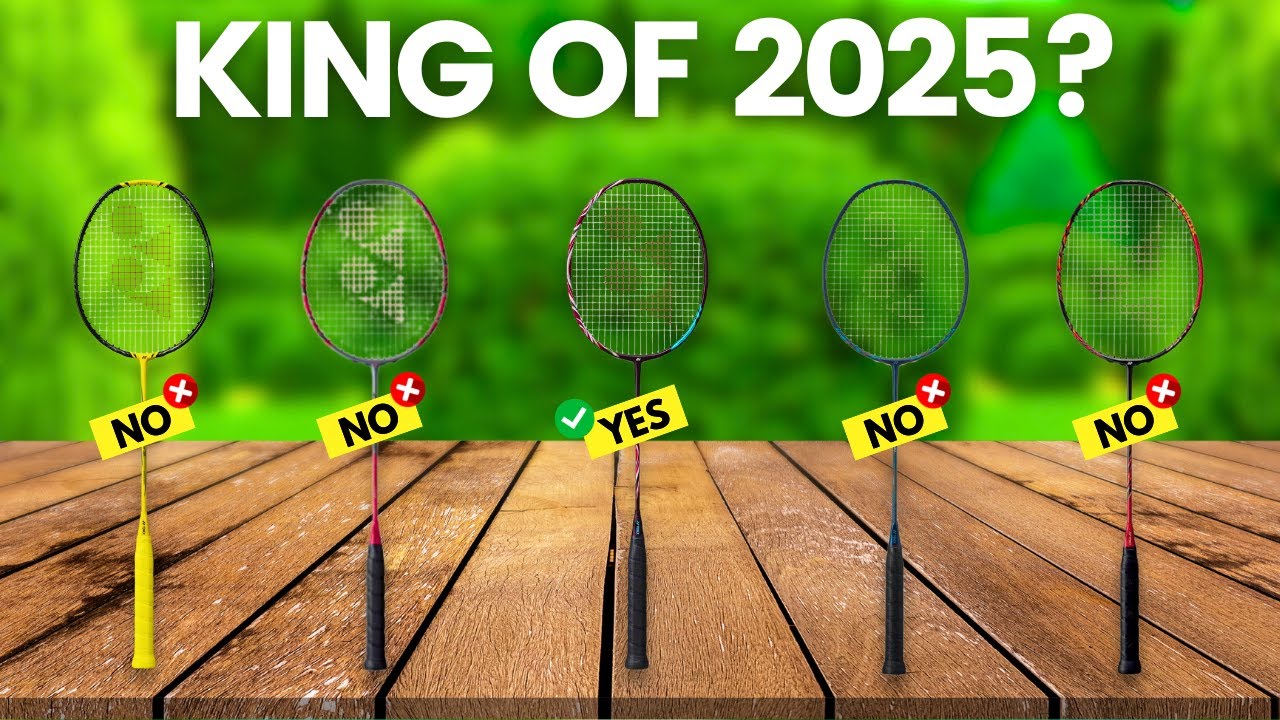
Top 5 Beginner-Friendly Rackets in 2025
Based on my experience and feedback from fellow players, here are my top picks:
1. Yonex Nanoray 10F ($45-$55)
- Weight: 4U (80-84g)
- Balance: Even
- Flex: Flexible
- Why I love it: Lightweight, forgiving, perfect for learning proper technique
- Best for: Complete beginners who want quality without overspending
2. Li-Ning G-Tek 58 ($40-$50)
- Weight: 3U (85-89g)
- Balance: Slightly head-light
- Flex: Medium-flexible
- Why I love it: Excellent value, durable, good all-arounder
- Best for: Budget-conscious beginners
3. Victor AL-2200 ($35-$45)
- Weight: 3U
- Balance: Even
- Flex: Flexible
- Why I love it: Affordable yet reliable, great for club play
- Best for: Beginners on a tight budget
4. Yonex Voltric 0.7DG ($60-$70)
- Weight: 4U
- Balance: Even balance
- Flex: Flexible
- Why I love it: Slightly higher quality, grows with you as you improve
- Best for: Beginners who plan to play regularly
5. Li-Ning Windstorm 72 ($50-$65)
- Weight: 4U
- Balance: Even
- Flex: Medium
- Why I love it: Great power-control balance, comfortable grip
- Best for: Beginners with some athletic background
Common Mistakes Beginners Make (And How to Avoid Them)
Mistake #1: Buying Based on Looks
That neon green racket with “MEGA POWER SMASH” written on it? Yeah, it’s probably not for beginners.
Instead: Focus on specs, not aesthetics
Mistake #2: Going Too Cheap
A $15 aluminum racket might seem like a good deal, but you’ll outgrow it in weeks.
Instead: Save up for a $50-70 proper racket
Mistake #3: Buying the Same Racket as Your Favorite Pro
Lin Dan’s racket costs $200 and requires advanced technique to use properly.
Instead: Buy for your current skill level, not your aspirations
Mistake #4: Ignoring String Tension
Most rackets come pre-strung at 20-24 lbs. That’s perfect for beginners.
Instead: Stick with factory tension for now. You can experiment later.
Mistake #5: Not Trying Before Buying
Online shopping is convenient, but if possible, hold the racket first.
Instead: Visit a store, feel the weight, check the grip size
Quick Decision Flowchart
Not sure which racket to buy? Use this:
Are you playing just for fun with friends occasionally? -> YES: Go with an aluminum racket under $30 -> NO: Continue below
Do you plan to play regularly (2+ times per week)? -> YES: Invest in a carbon fiber racket ($50-70) -> NO: Mid-range graphite racket ($40-50)
What’s your budget? -> Under $50: Li-Ning G-Tek 58 or Victor AL-2200 -> $50-$70: Yonex Nanoray 10F or Li-Ning Windstorm 72 -> $70+: Yonex Voltric 0.7DG
What’s your playing style preference? -> Don’t know yet: Even balance racket -> Love attacking/smashing: Slightly head-heavy -> Prefer defense/control: Head-light
What Else Do You Need to Buy?
Your racket isn’t the only thing you need. Here’s the complete beginner kit:
Essential:
- Badminton racket: $50-70
- Shuttlecocks: $15-20 for a tube of 12 (feather for serious play, nylon for practice)
- Badminton shoes: $40-60 (proper grip prevents injuries)
Nice to Have:
- Racket bag: $15-25
- Overgrip tape: $5-10 (keeps your grip fresh)
- Wristband: $5
Total beginner investment: $125-200
Is it worth it? Absolutely. This setup will last you at least a year if you take care of it.
How to Take Care of Your First Racket
You’ve invested in a good racket. Now make it last:
DO:
- Store in a protective cover when not in use
- Keep away from extreme heat (don’t leave in car trunk)
- Wipe down after playing (sweat damages the grip)
- Replace grip tape every 2-3 months
- Get it restrung every 6 months (if playing regularly)
DON’T:
- Hit the ground or walls with it
- Let others borrow it (they won’t be as careful)
- Overtighten strings beyond recommended tension
- Throw it in your bag with metal water bottles or keys
- Leave it in direct sunlight
Personal story: My first racket lasted me three years because I babied it. My friend’s expensive racket broke in six months because he was careless. Treat your racket well, and it’ll treat you well.
When to Upgrade to Your Second Racket
You’ll know it’s time to upgrade when:
- You’ve been playing regularly for 6+ months
- You’ve developed a clear playing style (attacker, defender, all-arounder)
- Your technique has improved significantly
- You feel limited by your current racket
Don’t rush to upgrade. Your beginner racket is teaching you fundamentals. Master those first.
Frequently Asked Questions
Q: Can I use a tennis racket for badminton?
A: No. Tennis rackets are much heavier and designed for a different game. You’ll hurt yourself trying.
Q: Should I buy two rackets?
A: Not necessary for beginners. Invest that money in shuttlecocks and coaching instead.
Q: What string tension should I use?
A: Stick with the factory pre-strung tension (usually 20-24 lbs). It’s perfect for beginners.
Q: Is a branded racket always better?
A: Reputable brands (Yonex, Li-Ning, Victor) ensure quality control. Unknown brands might save you $10 but could break easily.
Q: Can I share a racket with my partner?
A: Only if you have similar hand sizes and playing levels. Ideally, everyone should have their own racket.
Q: How do I know if my racket is the right weight?
A: Play a full game. If your arm feels exhausted or sore, your racket is too heavy.
Q: Should I buy online or in-store?
A: Both work. Online offers better prices; stores let you test before buying. If buying online, make sure there’s a good return policy.
Q: What’s the difference between a $50 and $150 racket?
A: Better materials, more advanced technology, lighter weight. But for beginners, the $50 racket is plenty good enough.
Final Thoughts: Just Start Playing
Here’s the truth: spending weeks researching the “perfect” racket is overthinking it.
Yes, choosing wisely matters. But you know what matters more? Actually getting on the court and playing.
My advice? Pick a racket from my recommendations above based on your budget, buy some shuttlecocks, and start playing. You’ll learn more in one month of actual play than in six months of reading reviews.
The best racket is the one you actually use.
So go ahead – make your choice, get out there, and enjoy the game. That’s what badminton is all about.
Ready to Buy? Here’s Your Action Plan
Step 1: Decide your budget ($40-70 recommended)
Step 2: Choose from my top 5 recommendations based on your budget
Step 3: Check online reviews on Amazon or badminton forums
Step 4: Buy from a reputable seller (check return policy)
Step 5: Get on the court and start playing!