
Introduction: Why Reaction Time is the Hidden Key to Winning in Badminton
Badminton is one of the fastest racquet sports in the world — a single rally can push your reflexes to their limits. Players have mere milliseconds to react to smashes, drops, and deceptive shots. That’s why reaction time often separates good players from great ones.
Improving your reaction time isn’t just about physical speed; it’s about sharpening your mental alertness, hand-eye coordination, and movement efficiency. Whether you’re defending a powerful smash or anticipating a tricky net shot, faster reactions give you the confidence to take control of every rally.
Let’s explore the best ways to train your body and mind to react faster and smarter on the badminton court.
1. Understand the Science Behind Reaction Time
Reaction time in badminton is the interval between when you see or anticipate a shuttle movement and when you physically respond to it. It involves three key stages:
-
Perception: Your brain recognizes the shuttle’s movement.
-
Decision: You decide how to respond (clear, drop, smash, etc.).
-
Action: Your body executes the movement.
By improving each stage — from mental anticipation to muscle response — you can react more efficiently and maintain control even under pressure.
2. Train Your Eyes for Faster Visual Recognition
Badminton requires rapid visual processing. The faster your eyes can track the shuttle, the quicker your body can respond.
Try these eye training methods:
-
Focus-shift drills: Quickly switch your gaze between different points on the court to enhance tracking speed.
-
Shadow drills: Follow a moving shuttle or partner without hitting, focusing only on tracking motion.
-
Peripheral awareness training: Practice noticing shuttle movement from the edge of your vision to prepare for sudden shots.
Professional players often do vision exercises daily because improved eye coordination directly boosts reaction performance.
3. Incorporate Multi-Shuttle Drills
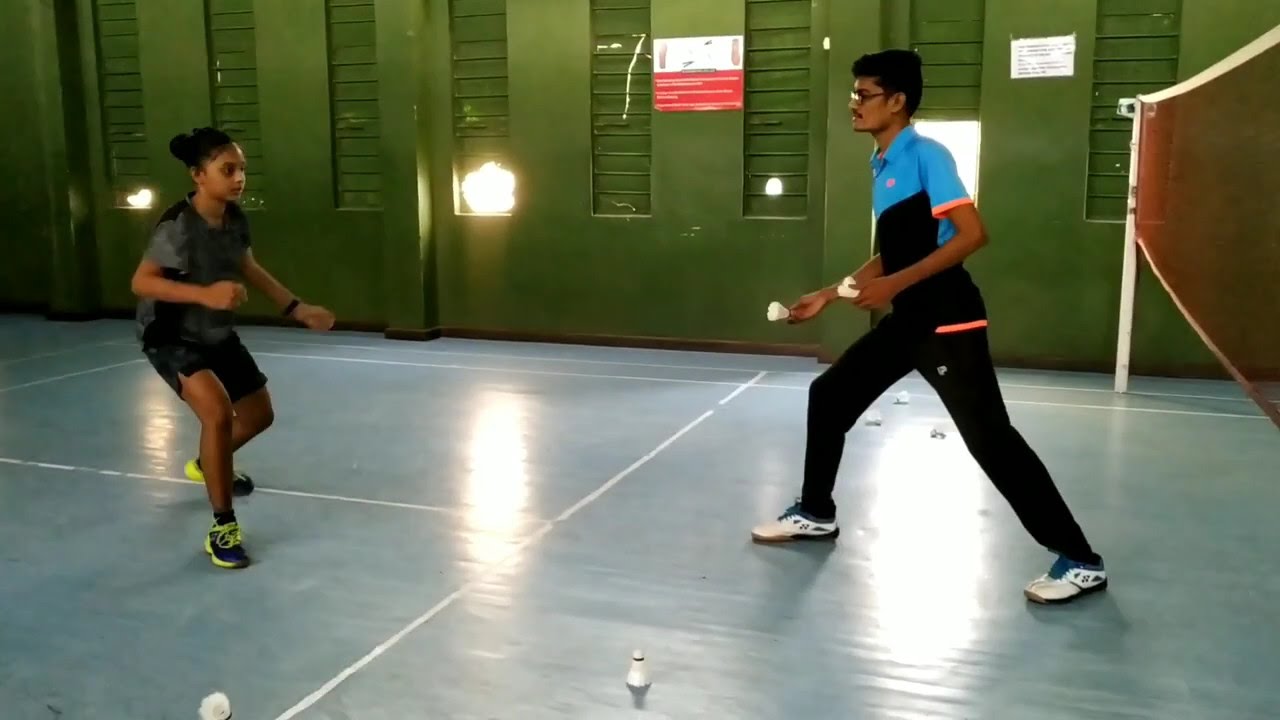
Multi-shuttle drills are among the most effective ways to sharpen reaction time because they simulate real-game chaos. A coach or partner feeds multiple shuttles rapidly, forcing you to adjust to unpredictable directions.
Start slow and gradually increase speed and variation. This develops instinctive movement and mental adaptability — crucial for defending smashes or responding to deceptive net play.
4. Use Shadow Badminton to Anticipate Movement
Shadow badminton means performing footwork and stroke movements without the shuttle. It helps build muscle memory and reduces reaction delay because your body becomes accustomed to executing specific motions automatically.
Do short sets focusing on:
-
Split-step timing before each move.
-
Smooth transition from defense to attack.
-
Fast recovery to the center base position.
When your footwork becomes automatic, your brain has more capacity to focus on predicting your opponent’s next move — a vital part of quick reactions.
5. Strengthen Your Lower Body and Core
Your legs and core are the foundation of fast reactions. They help you launch in any direction instantly. Strength training enhances the power behind each movement and reduces hesitation.
Focus on exercises like:
-
Squat jumps: Improve explosiveness for quick starts.
-
Lunges: Build balance and strength for directional shifts.
-
Planks: Strengthen your core to maintain body control during high-speed rallies.
A strong lower body gives you the confidence to commit to quick directional changes without losing stability.
6. Practice the Split-Step Timing
The split step is a small hop or bounce performed just before your opponent hits the shuttle. It prepares your muscles for movement in any direction, reducing your reaction delay by milliseconds.
Timing is key — jump just as your opponent makes contact with the shuttle. This preloads your legs, allowing instant movement whether the shuttle comes left, right, forward, or backward.
Practicing your split step consistently will make your reactions feel automatic during fast-paced rallies.
7. Improve Mental Focus and Anticipation
Reaction time is not only physical; it’s also mental. The best badminton players predict their opponent’s moves before they happen.
Enhance your anticipation skills by:
-
Observing body language and racket angle before each shot.
-
Watching your opponent’s shoulder movement for clues on direction.
-
Staying calm and mentally alert to avoid premature movements.
Visualization is another powerful technique — imagine different rallies and how you’ll respond. This mental rehearsal builds faster decision-making during real matches.
8. Use Agility Ladder and Cone Drills
Agility ladder and cone drills are great tools for improving speed, balance, and direction changes — all of which contribute to faster reactions.
Examples include:
-
Ladder shuffle: Move side to side quickly to enhance lateral movement.
-
Zigzag cone runs: Mimic unpredictable court patterns.
-
Reaction cone drill: Have a partner call random directions as you move to each cone.
These drills build neuromuscular coordination, helping your brain and body communicate faster in high-pressure situations.
9. Reaction Ball Training
Reaction balls are small rubber balls with uneven surfaces that bounce unpredictably. Practicing with them forces you to react quickly and adjust your movements instantly.
Throw a reaction ball against the wall or floor and catch it after the bounce. This improves both your reflexes and hand-eye coordination — essential for defensive play in badminton.
10. Optimize Your Warm-Up for Faster Reflexes
A proper warm-up prepares your muscles and nervous system for speed. Include:
-
Dynamic stretches (leg swings, arm circles).
-
Quick-feet drills or short sprints.
-
Shadow shots at increasing intensity.
This not only prevents injuries but also wakes up your reaction system so you’re match-ready from the very first rally.
A Smarter Way to Develop Lightning-Fast Reactions
Improving your reaction time in badminton takes consistent effort, combining mental focus, agility drills, and strength training. By practicing anticipation, visual awareness, and split-step timing, you’ll begin to notice split-second improvements that make all the difference in tight games. Over time, you won’t just be reacting — you’ll be predicting the game before it happens, giving you the ultimate edge on the court.